 Become a Patron!
Anal Botox is a medical treatment for fissures—not for sex. It may increase injury risk and cause temporary incontinence. There’s no evidence it makes anal intercourse safer or more comfortable.
Medical Disclaimer: This article is for educational purposes only and is not a substitute for professional medical advice, diagnosis, or treatment. Always seek the advice of a qualified healthcare provider with any questions you may have regarding a medical condition.
Botulinum toxin injections around the anus are a medical treatment used by colorectal surgeons—primarily for chronic anal fissures and sphincter spasm—not an enhancement for intimacy. Some people have asked about it to make receptive anal intercourse more comfortable. Here’s what you need to know about why this is not recommended and what the actual risks are.
What Does Anal Botox Actually Do?
Botulinum toxin temporarily relaxes the internal anal sphincter muscle. In medical practice, that reduction in resting pressure helps painful fissures heal and reduces spasm. Clinical guidelines from the American Society of Colon & Rectal Surgeons position botulinum toxin as first-line or second-line treatment for chronic anal fissures, though injection techniques and dosing vary among clinicians (Davids et al., 2023). The effects typically last 3 to 6 months on average (Brisinda et al., 2002).
Compared with surgery (lateral internal sphincterotomy), Botox heals many fissures but with higher recurrence rates; surgery has better healing rates but carries risk of long-term incontinence complications (Chen et al., 2014; Shao et al., 2009).
Critical point: Medical guidelines do not recommend Botox to facilitate sexual activity. Using it for that purpose is entirely off-label and has no supporting evidence.
Why Do Some People Think It Might Help With Sex?
The logic seems straightforward on the surface: a relaxed sphincter should make initial penetration feel less resistant. But this overlooks a crucial problem. Easier entry isn’t the same as safer intimacy, and the injection doesn’t strengthen the delicate rectal lining. The mucosa remains vulnerable. Any loss of natural muscle tone means it becomes easier to proceed faster or deeper than tissues can safely accommodate, and that’s where serious injury risk comes in.
Does Anal Botox Make Tearing More or Less Likely?
Here’s the problem: when muscle tone is chemically lowered, you lose part of the body’s natural braking system. This can lead to more tissue trauma because activity can become faster, deeper, or less controlled than the rectal mucosa can tolerate—especially without adequate lubrication and gradual pacing. Reduced resistance at entry may feel “better” initially, but this doesn’t protect the delicate internal tissues. It actually enables injury because the warning signals your body normally sends (discomfort, resistance) are dampened.
The truth: Botox does not protect against tearing. It may actually increase injury risk by removing natural protective resistance.
What Are the Real Risks?
The predictable side effect of anal Botox is temporary incontinence. Studies report transient flatus incontinence in up to 18% of patients and fecal incontinence in up to 5%, with symptoms typically resolving as the drug wears off over several weeks to months (Barbeiro et al., 2017; Brisinda et al., 2002; Silva et al., 2017). Serious complications like infection or abscess are uncommon but possible (Brisinda et al., 2002).
This means potentially dealing with:
- Unexpected gas leakage
- Mucus staining
- Inability to control bowel movements temporarily
- Impact on daily activities and confidence
These aren’t trivial side effects. They affect quality of life, even when temporary.
What Does the Evidence Actually Show?
Supported medical use: Chronic anal fissure and sphincter muscle spasm only. Multiple clinical trials support efficacy for pain relief and healing medical conditions (Davids et al., 2023).
Sexual enhancement: No controlled trials demonstrate that Botox improves sexual comfort or reduces intimacy-related injuries. There is no evidence this works for what some people want it for.
Long-term repeated elective use: Insufficient data. Safety over years for non-medical purposes has not been studied.
What Actually Works? Evidence-Based Alternatives
Instead of a medical procedure with real risks and no proven benefits for intimacy, consider approaches that are supported by evidence and clinical experience:
Preparation and Technique
- Generous lubrication: Use ample water- or silicone-based lubricant compatible with condoms. Reapply during longer sessions to reduce friction. This is proven to reduce injury risk.
- Gradual training: Using progressively sized implements over weeks can build comfort without paralyzing muscle function or risking incontinence. Start small and progress slowly. Patience matters here.
- External and internal anal massage: Gentle massage of the external sphincter and gradual internal massage can help relax muscles naturally without chemical intervention. This allows the receptive partner to learn their body’s responses and control the relaxation process. Start externally with gentle circular motions, then progress to slow, patient internal massage with adequate lubrication. This respects the body’s natural feedback mechanisms and builds awareness of what feels comfortable versus what doesn’t.
- Pelvic floor physical therapy: For people with overactive pelvic floor muscles, specialists can teach relaxation techniques that address the actual problem. Some therapists can teach proper self-massage and relaxation exercises. This isn’t commonly discussed, but it’s a legitimate medical approach that can make a real difference.
- Communication and control: Establish clear signals to slow or stop; choose positions that allow the receptive partner to control depth and pace. This protects against injury better than any injection. It sounds basic, but it’s often the missing piece.
Why These Methods Work Better
These approaches:
- Don’t carry incontinence risks
- Don’t require medical procedures
- Actually address comfort and safety through conscious muscle control
- Are reversible and adjustable
- Allow the person to feel and respond to their body’s signals rather than numbing them
- Don’t create a false sense of safety that leads to injury
- Build body awareness and control over time
What About STI Risk?
Micro-tears in the rectal lining are a proven risk factor for HIV and other sexually transmitted infections. If Botox leads to more tissue trauma (which it can), STI risk goes up, not down. Barrier protection and routine screening remain essential regardless of what preparation methods you use.
Who Should Definitely Not Consider This?
- People with active anorectal infections, untreated fissures, or significant baseline incontinence
- Those with neuromuscular conditions affected by botulinum toxin
- Anyone unable to accept temporary leakage or access follow-up medical care
- Anyone seeking this for sexual purposes—there are better, safer alternatives
Red Flags in Marketing
Be skeptical of any claims that Botox will “prevent tearing,” “guarantee safe anal sex,” or “eliminate discomfort.” Botox relaxes muscle—it does not strengthen or remodel rectal tissue. If marketing downplays continence risks or suggests “no downtime,” that’s misleading and potentially dangerous. These are red flags that suggest the provider either doesn’t understand the procedure or is prioritizing profit over patient safety.
The Bottom Line
Anal Botox is a legitimate medical treatment for specific medical conditions. It is not a proven, safe, or recommended method for facilitating intimacy. It carries real risks—including temporary incontinence and potentially increased injury risk—without evidence of the benefits some people are seeking.
For people seeking comfort and safety in intimacy, the evidence supports gradual preparation, pelvic floor awareness, generous lubrication, barrier protection, and patient communication. These methods work, carry no medical risks, and don’t require injecting a continence muscle with a paralytic agent.
If you’re struggling with pain or anxiety about anal sex, consider speaking with a qualified pelvic floor therapist or sexual health clinician before exploring medical procedures. If you’re experiencing pain or difficulty that suggests an underlying medical issue, consult a colorectal specialist for a proper assessment rather than pursuing off-label use of a medical intervention.
This article is intended to help people make informed, evidence-based decisions about their health and intimacy.
References
- Barbeiro, S., Atalaia-Martins, C., Marcos, P., Gonçalves, C., Canhoto, M., Arroja, B., Silva, F., Cotrim, I., Eliseu, L., Santos, A., & Vasconcelos, H. (2017). Long-term outcomes of Botulinum toxin in the treatment of chronic anal fissure: 5 years of follow-up. GE Portuguese Journal of Gastroenterology, 24(3), 123-130. https://doi.org/10.1159/000453389
- Brisinda, G., Cadeddu, F., Brandara, F., Marniga, G., & Maria, G. (2002). Side effects of botulinum toxin injection for benign anal disorders. International Journal of Colorectal Disease, 17(5), 334-338. https://doi.org/10.1007/s00384-002-0395-x
- Brisinda, G., Maria, G., Bentivoglio, A. R., Cassetta, E., Gui, D., & Albanese, A. (2002). Long-term follow-up (42 months) of chronic anal fissure after healing with botulinum toxin. Gastroenterology, 123(1), 112-117. https://doi.org/10.1053/gast.2002.34308
- Chen, H. L., Woo, X. B., Wang, H. S., Lin, Y. J., Luo, H. X., Chen, Y. H., Chen, C. Q., & Peng, J. S. (2014). Botulinum toxin injection versus lateral internal sphincterotomy for chronic anal fissure: A meta-analysis of randomized control trials. Techniques in Coloproctology, 18(8), 693-698. https://doi.org/10.1007/s10151-014-1121-4
- Davids, J. S., Hawkins, A. T., Bhama, A. R., Feinberg, A. E., Grieco, M. J., Lightner, A. L., Feingold, D. L., & Paquette, I. M. (2023). The American Society of Colon and Rectal Surgeons Clinical Practice Guidelines for the Management of Anal Fissures. Diseases of the Colon & Rectum, 66(2), 190-199. https://doi.org/10.1097/DCR.0000000000002664
- Menteş, B. B., Irkörücü, O., Akin, M., Leventoğlu, S., & Tatlicioğlu, E. (2003). Comparison of botulinum toxin injection and lateral internal sphincterotomy for the treatment of chronic anal fissure. Diseases of the Colon & Rectum, 46(2), 232-237. https://doi.org/10.1097/01.DCR.0000044712.58674.09
- Shao, W. J., Li, G. C., & Zhang, Z. K. (2009). Systematic review and meta-analysis of randomized controlled trials comparing botulinum toxin injection with lateral internal sphincterotomy for chronic anal fissure. International Journal of Colorectal Disease, 24(9), 995-1000. https://doi.org/10.1007/s00384-009-0683-5
- Silva, J., Ambrósio, E., Teixeira, S., Gregório, C., Martinho, F., & Marum, S. (2017). Botulinum toxin improves pain in chronic anal fissure. Porto Biomedical Journal, 2(6), 239-242. https://doi.org/10.1016/j.pbj.2017.05.003
About Dr. Martha Tara Lee

Dr. Martha Tara Lee has been a passionate advocate for positive sexuality since 2007. With a Doctorate in Human Sexuality and a Master’s in Counseling, she founded Eros Coaching in 2009 to help individuals and couples lead self-actualized and pleasurable lives. Her expertise includes working with couples in unconsummated marriages, individuals with sexual inhibitions or desire discrepancies, men facing erection and ejaculation concerns, and members of the LGBTQIA+ and kink communities. She welcomes people of all sexual orientations and offers both online and in-person consultations in English and Mandarin.
Dr. Lee is the only certified sexuality educator by the American Association of Sexuality Educators, Counselors and Therapists (AASECT) in the region since 2011, and became an AASECT-certified sexuality educator supervisor in 2018. Her fun, educational, and sex-positive approach has been featured in international media including Huffington Post, Newsweek, and South China Morning Post. She currently serves as Resident Sexologist for the Singapore Cancer Society, Of Noah.sg, OfZoey.sg, and Sincere Healthcare Group., and is the host of the podcast Eros Matters.
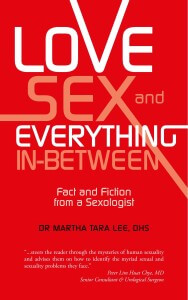
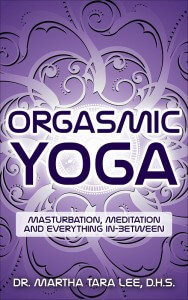
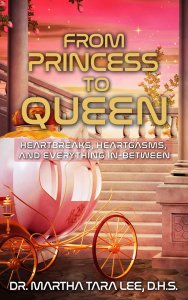
An accomplished author, Dr. Lee has published four books: Love, Sex and Everything In-Between (2013), Orgasmic Yoga: Masturbation, Meditation and Everything In-Between (2015), From Princess to Queen: Heartbreaks, Heartgasms and Everything In-Between (2017), and {Un}Inhihibited (2019). Her contributions have been recognized with numerous honors, including Her World’s Top 50 Inspiring Women under 40 (2010), CozyCot’s Top 100 Inspiring Women (2011), Global Woman of Influence (2024), the Most Supportive Relationship Coach (Singapore Business Awards, APAC Insider, 2025), and the Icon of Change International Award (2025).
You can read the testimonials she’s received over years here. For her full profile, click here. Email her here.