 Become a Patron!
Trigger warning: emotional abuse, coercion, narcissistic control
At the 2025 US Open, Czech tennis star Karolína Muchová stopped mid-match in tears after spotting her ex-boyfriend in the crowd. She later regained her composure and went on to win (LADbible, 2025; talkSPORT, 2025). To some, it may have looked like a momentary distraction. To survivors, it was something else entirely—a public glimpse of what it means when someone disregards your boundaries and inserts themselves into your life.
Her experience echoed mine. Years ago, in my first marriage, I lived with the same cycle of intrusion, entitlement, and control. What she endured for a moment on the court, I faced daily in my own home.
My Story: A Prison Disguised as Love
I was married at 21. In my Asian culture, leaving home before marriage was rarely acceptable. I thought I was securing freedom. Instead, I walked into a prison disguised as happily ever after.
He pursued me relentlessly. Even when I said I needed space after work to study for my distance learning degree, he would show up anyway—sometimes planting himself in my family living room. He insisted on carrying my handbag on dates. I initially rationalized it as chivalry. But when he controlled my money and transport cards, I realized I couldn’t leave during fights. He was literally holding my freedom in his hands.
After marriage, the grip tightened. He worked to estrange me from my family by planting seeds that they were a bad influence on me. Then came the constant belittling: “You’re too stupid. You have no taste in clothes. You don’t know what’s good for you.” Over time, I began to believe him.
Even those with healthy self-esteem can be worn down by repetition. Research on the “illusory truth effect” shows that repeated statements, even false ones, become more believable over time (Fazio, Brashier, Payne, & Marsh, 2015). When those statements come from someone close, they reshape your self-image. Combined with learned helplessness, where repeated mistreatment makes resistance feel pointless (Seligman, 1975), the cage becomes invisible but powerful.
He also controlled my friendships, making sure I had no friends. When I developed friendships at work—even though they were all women—he grew jealous. After a girls’ night out, he interrogated me: had he come up in conversation? If yes, what exactly had we said about him? If not, why not? Didn’t I miss him? In his world, everything circled back to him.
At the time, I didn’t know the term “love bombing.” I just knew something felt wrong, yet I rationalized his intensity as passion.
Love Bombing: When Passion Masks Manipulation
Love bombing is a strategy where someone overwhelms you with affection, attention, and gifts to accelerate intimacy (Huntington, n.d.). Common signs include:
Lavish compliments and declarations of “soulmate” love early on
Constant presence, ignoring your requests for space
Grand gestures designed to fast-track commitment
Boundary violations framed as caring—“I just can’t stay away from you”
Pressure to commit quickly, before trust can grow
Claiming their overwhelming behavior is just “passionate love”
It feels intoxicating because of how our brains work. Intense early affection triggers dopamine and oxytocin, the same “bonding chemicals” activated by addictive substances (Burkett & Young, 2012). By the time criticism or control sets in, you are already hooked.
Research links love bombing strongly to narcissistic traits, used deliberately to gain power and create dependency (Strutzenberg, 2016).
From Love Bombing to Narcissistic Control
But love bombing is only the entry point. Over time, it often shifts into full-blown narcissistic coercive control. Narcissism involves entitlement, lack of empathy, and an inflated need for admiration (Campbell & Foster, 2007). In relationships, this can take the form of:
Ignoring or trampling boundaries
Creating dependence by controlling essentials like money or keys
Repeated insults and gaslighting that undermine confidence
Isolating you from family and friends
Demanding constant attention and making every conversation about themselves
Stark (2007) describes coercive control as “a liberty crime”—not one dramatic incident, but an ongoing campaign of domination. That was my marriage: not love, but a slow suffocation.
Why Victims Stay
It’s easy to ask, Why didn’t you just leave? The reality is more complicated.
Neurologically, romantic attachment activates the same brain pathways as drugs like cocaine, making separation feel like withdrawal (Fisher, Xu, Aron, & Brown, 2016). Psychologically, abusers use intermittent reinforcement—alternating cruelty with brief kindness—which is one of the most powerful forms of conditioning (Ferster & Skinner, 1957). Socially, stigma around divorce and cultural expectations can trap people further.
Globally, 1 in 4 women will experience intimate partner violence in their lifetime, and coercive control is often present before physical abuse (World Health Organization, 2021). Staying is not weakness. It is survival in the midst of manipulation and entrapment.
Warning Signs of Love Bombing and Narcissistic Abuse
If you recognize these behaviors, take them seriously:
They ignore your “no” and dismiss your boundaries.
They overwhelm you with grand gestures early on.
They insist constant intensity means love.
They try to isolate you from friends or family.
They make every conversation circle back to them.
They regularly belittle you, even in “jokes.”
They show jealousy over platonic relationships.
They interrogate you about time spent with others.
Recovery: What Healing Really Looks Like
Leaving was not the end. Healing was a long, uneven process.
When the marriage ended, I was a shadow of who I was—I didn’t know the person staring back at me in the mirror. I had to relearn who I was, what I liked, and how to trust myself after years of gaslighting. I had to make new friends because I had none. I had to build new routines of independence—managing finances, making decisions without fear of criticism.
Concrete steps that helped me included:
Journaling to track my thoughts and catch internalized insults
Practicing boundaries in small, safe contexts
Slowly rebuilding a support network of friends I could trust
- Counselling to process the trauma and rebuild confidence
Engaging in mindfulness and self-compassion practices
Healing also meant facing setbacks – people assuming the divorce was my fault based on their projection who I must be in a relationship.
Aftermath: Learning to Trust Again
Rebuilding trust in others was one of the hardest challenges I faced after leaving. At first, I questioned everyone’s motives, analyzing every gesture and word for hidden meanings. I confused intensity with danger, flinching when someone showed genuine interest or affection. It took time to recognize that healthy partners operate differently—they respect boundaries without resentment, encourage your friendships rather than sabotage them, and don’t need every conversation or moment to revolve around them.
Gradually, I came to understand that true love allows space for you to exist as yourself. It doesn’t demand self-abandonment or require you to shrink to make someone else comfortable. Most importantly, I learned to love myself enough not to rationalize away red flags or make excuses for behavior that violated my boundaries. Self-love, I discovered, isn’t just positive thinking—it’s the fierce protection of your own wellbeing.
From the Court to My Life: A Shared Lesson
Muchová’s moment of distress at seeing her ex uninvited at her match, and my own years trapped in a controlling marriage, illuminate the same fundamental truth about coercive partners: they thrive on intrusion and domination. They insert themselves into spaces where they don’t belong, disregard clearly stated boundaries, and attempt to control outcomes even when the relationship is over. But here’s what they don’t get to do—they don’t get to win.
Whether it’s an ex showing up at a tennis match or a spouse who makes every conversation about himself, we each have the power to reclaim our autonomy. Intensity is not love. Control is not care. Persistence is not passion. Real love respects your space, honors your choices, and celebrates your independence rather than trying to crush it.
Finding Support
If you see yourself in this story, know you are not alone. Many of us have mistaken control for care. Many of us have stayed longer than we should have. But many of us have also rebuilt our lives.
If you are struggling, reach out—to a counselor, a trusted friend, or a hotline. You deserve safety, dignity, and love that honors your boundaries.
As someone who’s been through hell and back, I have both the stomach for difficult conversations and the radar for detecting red flags that come from professional training as well as lived experience—I know what real healing looks like because I’ve done the work myself.
Contrary to what some believe, you don’t need to be in a perfect relationship to help others heal from broken ones. Many of us who’ve lived through the pain become better counselors precisely because of it—we root for our clients in ways that only fellow survivors can.
At Eros Coaching, we help individuals and couples untangle unhealthy dynamics and rediscover what healthy intimacy looks like. If you’re ready to begin, you can reach out.
Most importantly: choose yourself. Your autonomy matters.
References
Burkett, J. P., & Young, L. J. (2012). The behavioral, anatomical and pharmacological parallels between social attachment, love and addiction. Psychopharmacology, 224(1), 1–26. https://doi.org/10.1007/s00213-012-2794-x
Campbell, W. K., & Foster, C. A. (2007). The narcissistic self: Background, an extended agency model, and ongoing controversies. In C. Sedikides & S. Spencer (Eds.), The self (pp. 115–138). Psychology Press.
Cupach, W. R., & Spitzberg, B. H. (2004). The dark side of relationship pursuit: From attraction to obsession and stalking. Lawrence Erlbaum Associates.
Fazio, L. K., Brashier, N. M., Payne, B. K., & Marsh, E. J. (2015). Knowledge does not protect against illusory truth. Journal of Experimental Psychology: General, 144(5), 993–1002. https://doi.org/10.1037/xge0000098
Ferster, C. B., & Skinner, B. F. (1957). Schedules of reinforcement. Appleton-Century-Crofts.
Fisher, H. E., Xu, X., Aron, A., & Brown, L. L. (2016). Intense, passionate, romantic love: A natural addiction? Journal of Positive Psychology, 11(5), 1–8. https://doi.org/10.1080/17439760.2016.1167936
Huntington, C. (n.d.). Love bombing: Definition, examples, & psychology. Berkeley Well-Being Institute. Retrieved from https://www.berkeleywellbeing.com/love-bombing.html
LADbible. (2025, September 1). Tennis player breaks down after seeing ex-boyfriend in crowd at US Open “where he shouldn’t be”. Retrieved from https://www.ladbible.com
Seligman, M. E. P. (1975). Helplessness: On depression, development, and death. W. H. Freeman.
SimplyPsychology. (2024, January 23). Narcissistic love bombing cycle: Idealize, devalue, discard. Retrieved from https://www.simplypsychology.org/narcissistic-love-bombing-cycle.html
Stark, E. (2007). Coercive control: The entrapment of women in personal life. Oxford University Press.
talkSPORT. (2025, September). US Open star stopped match and was reduced to tears as ex-boyfriend spotted in crowd. Retrieved from https://www.talksport.com
The Sun. (2025, September). US Open star breaks down after spotting ex in crowd. Retrieved from https://www.thesun.co.uk
World Health Organization. (2021). Violence against women prevalence estimates, 2018. WHO.
About Dr. Martha Tara Lee
 Dr. Martha Tara Lee has been a passionate advocate for positive sexuality since 2007. With a Doctorate in Human Sexuality and a Master’s in Counseling, she founded Eros Coaching in 2009 to help individuals and couples lead self-actualized and pleasurable lives. Her expertise includes working with couples in unconsummated marriages, individuals with sexual inhibitions or desire discrepancies, men facing erection and ejaculation concerns, and members of the LGBTQIA+ and kink communities. She welcomes people of all sexual orientations and offers both online and in-person consultations in English and Mandarin.
Dr. Lee is the only certified sexuality educator by the American Association of Sexuality Educators, Counselors and Therapists (AASECT) in the region since 2011, and became an AASECT-certified sexuality educator supervisor in 2018. Her fun, educational, and sex-positive approach has been featured in international media including Huffington Post, Newsweek, and South China Morning Post. She currently serves as Resident Sexologist for the Singapore Cancer Society, Of Noah.sg, OfZoey.sg, and Sincere Healthcare Group, and is the host of the podcast Eros Matters.
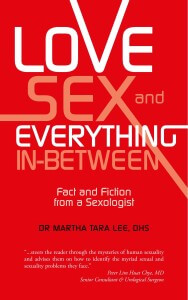
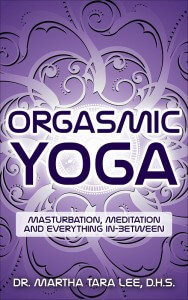
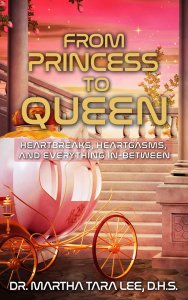
An accomplished author, Dr. Lee has published four books: Love, Sex and Everything In-Between (2013), Orgasmic Yoga: Masturbation, Meditation and Everything In-Between (2015), From Princess to Queen: Heartbreaks, Heartgasms and Everything In-Between (2017), and {Un}Inhihibited (2019). Her contributions have been recognized with numerous honors, including Her World’s Top 50 Inspiring Women under 40 (2010), CozyCot’s Top 100 Inspiring Women (2011), Global Woman of Influence (2024), the Most Supportive Relationship Coach (Singapore Business Awards, APAC Insider, 2025), and the Icon of Change International Award (2025).
You can read the testimonials she’s received over years here. For her full profile, click here. Email her here.