 Become a Patron!
 Why dating didn’t fail — the system did
2025 wasn’t the year people stopped wanting connection. It was the year the economic foundations of partnership caught up with reality—and many people quietly opted out.
Not through ideology, but through recognizing that traditional pathways no longer made practical sense.
Here are the ten structural shifts that changed how people approached love and partnership this year.
1. Housing policy became relationship policy (Singapore)
What changed: Singapore’s Build-To-Order system forces impossible choices. To access subsidized public housing, couples must be married or show “intent to marry”—but with 4-5 year wait times and resale units past S$600,000, they’re committing to property before committing emotionally. Singles wait until 35 or pay 40-50% of income for private rentals. Similar patterns in Seoul and Hong Kong.
Why it matters: Couples apply for BTO six months into dating. Housing access becomes the primary relationship forcing function—not emotional readiness, but Excel spreadsheets and ballot luck.
2. Living Apart Together (LAT) went mainstream
What changed: Between 2000 and 2022, married US couples living apart grew 40%. By 2025, 3.89 million Americans lived separately from spouses by design. Research shows 13% of newlyweds start in separate homes; among older couples (60+), nearly 40% maintain LAT arrangements.
Why it matters: This isn’t commitment phobia. It’s a structural solution to merger costs—financial and psychological. Women over 60 report better mental health in LAT arrangements, avoiding unpaid caretaker roles that emerge automatically in cohabitation. LAT works particularly well for people who’ve experienced traditional cohabitation and found it incompatible with autonomy.
3. Intentional singlehood became economically viable
What changed: Morgan Stanley projects 45% of women 25-44 will be single by 2030. Nearly half of US women under 50 say marriage isn’t essential. Urban Asia: single-person households exceed 30% in Tokyo, Seoul, Singapore.
Why it matters: For the first time, educated women can sustain solo living long-term without subsidy. That changes partnership calculus entirely. Single women at midlife report comparable or higher life satisfaction than married women, particularly those without strong desire to partner.
What these first three trends signal: Traditional partnership is no longer the only economically rational choice.
4. The “relationship escalator” broke down
What changed: The progression—dating, cohabitation, marriage, children—no longer functions as default. People mix order, skip steps, reject the model. Some marry but never cohabit. Others cohabit decades without marrying.
Why it matters: Every relationship becomes negotiation from scratch. Exhausting but liberating for people whose lives don’t fit templates—LAT couples, blended families, older adults entering new partnerships.
5. Economic precarity made partnership feel risky
What changed: Singapore’s median marriage age: 30.8 (men), 29.2 (women)—up from 28.3/26.5 in 2000. Housing costs consume 40-50% of dual-income earnings. Adding another person’s financial unpredictability feels like risk, not refuge.
Why it matters: This reframes partnership from safety net to liability. When partnership feels like liability rather than asset, people delay not from fear of commitment but from financial realism. Divorce costs money. Separation costs money. Dating costs money.
6. Fertility technology decoupled reproduction from partnership
What changed: Egg freezing, IVF, sperm banks—parenthood no longer requires a partner at conception. While Singapore’s access remains limited, technology and attitudes shift.
Why it matters: Timeline pressure eases. Women aren’t racing to find partners before 35 solely for reproductive reasons.
What these shifts reveal: The structural reasons people historically partnered—housing, security, reproduction—are unbundling.
7. Digital work removed geography as forcing function
What changed: Remote work means couples don’t sacrifice careers to live together. You can maintain partnership across cities without “long-distance dysfunction” classification.
Why it matters: Geography was the ultimate forcing function: move for love or stay for career. Location flexibility enables the LAT surge—not just preference but logistical possibility.
8. Marriage lost its legal monopoly
What changed: Healthcare access, inheritance, hospital visitation, medical decisions—formerly marriage-exclusive benefits now have workarounds. Domestic partnerships, living wills, advance directives.
Why it matters: When marriage isn’t administratively necessary for legal protection, it becomes purely emotionally motivated. Marriage shifts from requirement to preference.
9. Friendship networks replaced romantic caregiving
What changed: “Chosen family” provides support, co-living, financial backup, companionship previously expected from spouses. Multi-person non-romantic households, co-housing communities persist into middle age.
Why it matters: When friends provide stability, partnership becomes enhancement rather than survival necessity. Redistributing care across relationship types makes romantic relationships healthier—they’re not burdened with being everything.
10. Cultural narrative matched economic reality
What changed: Economic conditions for traditional partnership eroded while messaging stayed aspirational. In 2025, that gap closed. Media, research, policy acknowledged what individuals knew: the old model doesn’t work anymore.
Why it matters: Permission matters. When non-traditional paths stop being framed as failure, people pursue them with less shame.
What this means
2025 wasn’t about giving up on love. It was about giving up on systems that no longer served them.
These aren’t psychological problems. They’re structural adaptations.
Clients now ask: “How do I design a relationship that works inside Singapore’s economic reality?”
If you’re navigating that question—trying to design relationships that make sense inside Singapore’s realities, not Instagram ideals—you don’t have to figure it out alone.
At Eros Coaching, we work with individuals and couples across Singapore and Asia on relationship design beyond traditional models, navigating housing and economic pressures, intentional singlehood, and LAT relationships.
References
Bankey, N. (2025). Married and living apart together. Family Profiles, FP-25-27. National Center for Family & Marriage Research.
Department of Statistics Singapore. (2025). Statistics on marriages and divorces, 2024. https://www.singstat.gov.sg
Korean Statistical Information Service. (2024). Household projections for Korea. https://kosis.kr/eng/
Statistics Bureau of Japan. (2023). Population census: Household structure. https://www.stat.go.jp/english/
U.S. Census Bureau. (2022). America’s families and living arrangements: 2022. https://www.census.gov
About Dr. Martha Tara Lee

Dr. Martha Tara Lee has been a passionate advocate for positive sexuality since 2007. With a Doctorate in Human Sexuality and a Master’s in Counseling, she founded Eros Coaching in 2009 to help individuals and couples lead self-actualized and pleasurable lives. Her expertise includes working with couples in unconsummated marriages, individuals with sexual inhibitions or desire discrepancies, men facing erection and ejaculation concerns, and members of the LGBTQIA+ and kink communities. She welcomes people of all sexual orientations and offers both online and in-person consultations in English and Mandarin.
Dr. Lee is the only certified sexuality educator by the American Association of Sexuality Educators, Counselors and Therapists (AASECT) in the region since 2011, and became an AASECT-certified sexuality educator supervisor in 2018. Her fun, educational, and sex-positive approach has been featured in international media including Huffington Post, Newsweek, and South China Morning Post. She currently serves as Resident Sexologist for the Singapore Cancer Society, Of Noah.sg, OfZoey.sg, and Sincere Healthcare Group., and is the host of the podcast Eros Matters.
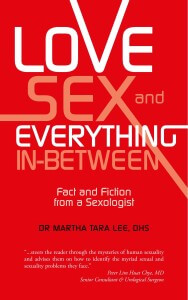
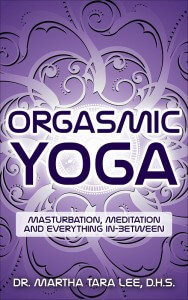
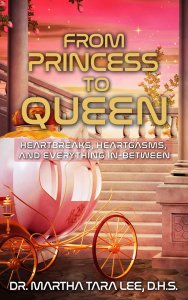
An accomplished author, Dr. Lee has published four books: Love, Sex and Everything In-Between (2013), Orgasmic Yoga: Masturbation, Meditation and Everything In-Between (2015), From Princess to Queen: Heartbreaks, Heartgasms and Everything In-Between (2017), and {Un}Inhihibited (2019). Her contributions have been recognized with numerous honors, including Her World’s Top 50 Inspiring Women under 40 (2010), CozyCot’s Top 100 Inspiring Women (2011), Global Woman of Influence (2024), the Most Supportive Relationship Coach (Singapore Business Awards, APAC Insider, 2025), and the Icon of Change International Award (2025).
You can read the testimonials she’s received over years here. For her full profile, click here. Email her here.