 Become a Patron!
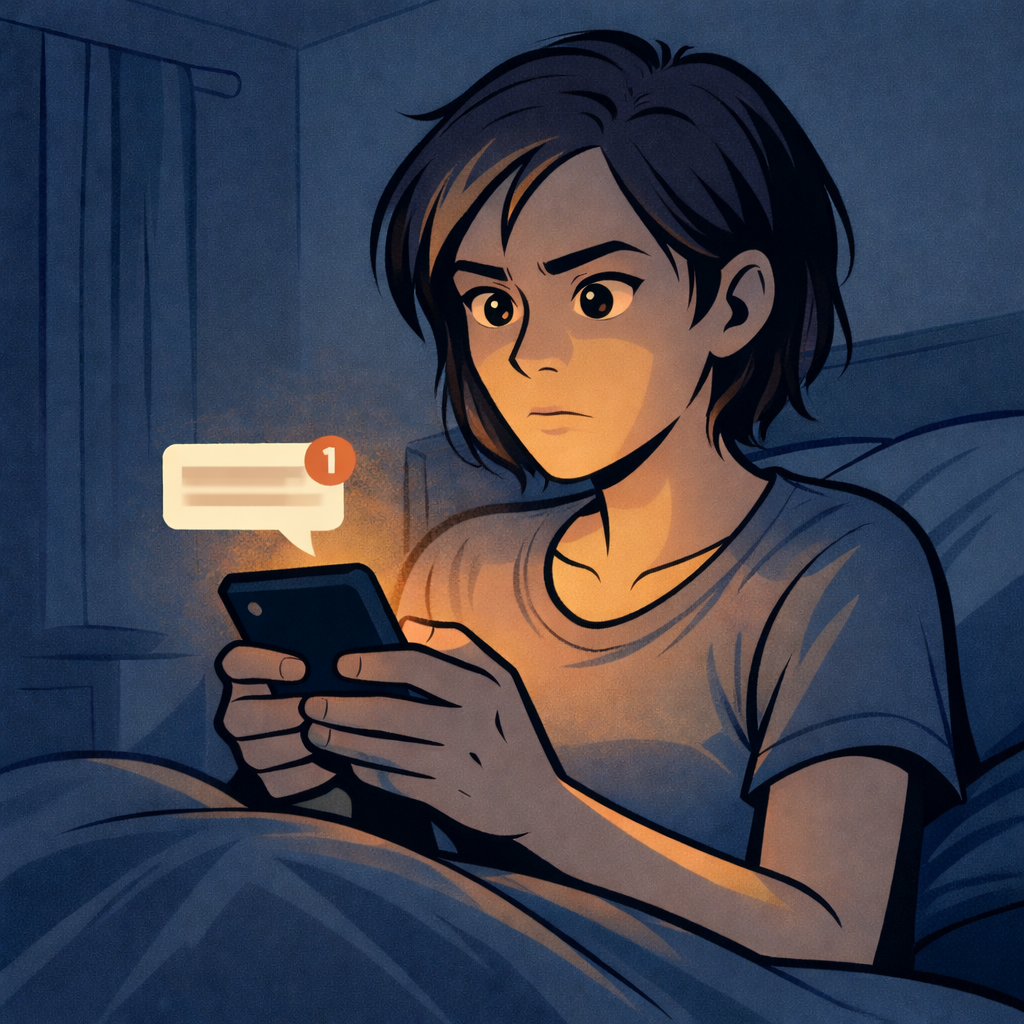 You know the feeling. The text that finally arrives after hours of silence. The sudden warmth after distance. That ache in your chest when someone who was just here suddenly isn’t—and you can’t stop checking your phone, wondering what shifted.
Your body floods with something urgent, alive, important.
And you mistake it for connection.
With Emily in Paris dominating Netflix and morally grey characters ruling BookTok and dating culture alike, the question won’t quit: why do we keep gravitating toward emotionally unavailable, volatile, or “bad boy” partners—even when we know better?
This isn’t about being stupid, broken, or making poor choices. And it’s definitely not gendered. People across the spectrum—all genders, orientations, relationship structures—report being drawn to partners who are intense, unpredictable, or allergic to commitment.
The pull is real. And it’s deeply, maddeningly psychological.
Unpredictability Feels Like Chemistry (But It’s Actually Just Your Dopamine System Getting Played)
Here’s what the research tells us: inconsistent reward patterns hijack desire. Partners who swing between warmth and withdrawal activate the brain’s dopamine system more intensely than those who show up reliably (Fisher, 2004; Schultz, 2016).
What often gets labeled as romance is, neurologically speaking, intermittent reinforcement—the same mechanism behind gambling addiction.
When affection, attention, or intimacy becomes unpredictable, your nervous system goes on high alert. What you experience as “chemistry” or “passion” is often arousal mixed with anxiety. Your body learns to associate emotional uncertainty with excitement.
This is why calm, secure partners can initially register as boring, while chaotic ones feel electric. It’s not that you’re broken—it’s that your nervous system has been conditioned to mistake threat for connection.
Desire Evolved Before Emotional Safety Did
Attraction isn’t purely about safety, and pretending otherwise won’t help anyone. Novelty, risk, and ambiguity activate sexual interest (Buss & Schmitt, 2019). That’s neurobiology, not pathology.
Partners who signal rule-breaking, dominance, emotional distance, or rebellion often register as socially powerful, sexually confident, or resistant to control. For many people, this codes as desirable—not because danger is healthy, but because our erotic wiring didn’t evolve with long-term partnership workshops in mind.
This helps explain why “morally grey” characters feel compelling in fiction. The problem is when that template bleeds into real life, where consequences aren’t scripted and redemption arcs are rare.
Your Attachment System Recognizes What’s Familiar—Not What’s Good for You
What we see consistently in attachment research: we’re drawn to what feels recognizable, not what’s objectively healthy (Hazan & Shaver, 1987; Mikulincer & Shaver, 2016).
If your early relational experiences were inconsistent, unpredictable, or emotionally volatile, your nervous system may code those patterns as familiar—even comforting. This isn’t conscious. It’s pattern recognition at a somatic level.
For someone whose system is calibrated to volatility, secure attachment can initially feel flat. Boring. Wrong. Because safety doesn’t match the template. When threat is absent, autonomic arousal drops—and without that familiar activation, the system misreads safety as disinterest.
This applies across genders. The “bad boy” is just cultural shorthand for emotional unavailability paired with charisma.
Power Dynamics Can Be Erotically Charged (And That’s Not Inherently Wrong)
Desire doesn’t exist in a vacuum. It’s shaped by culture, power, and constraint.
For people socialized to be responsible, accommodating, or emotionally regulated—often women, but not exclusively—being with someone who rejects rules or emotional accountability can feel temporarily liberating. The relationship becomes a space where expectations drop, norms get disrupted, and you’re free from the performance of being “good.”
This is less about the other person being bad and more about what they permit you to feel: rebellious, uncontained, alive.
The danger isn’t the desire itself. It’s when you mistake that temporary freedom for intimacy.
Fiction Promises Transformation. Reality Rarely Delivers.
In stories, the bad character almost always softens, redeems, or chooses love in the end.
In real life? Core attachment styles and relational behaviors are remarkably stable—especially without active therapeutic work (Fraley, 2002). The fantasy that your desire will inspire someone’s transformation is culturally reinforced and psychologically unreliable.
Attraction alone does not produce emotional capacity. This gap between fantasy and reality is where people get hurt.
The Difference Between Attraction and Compatibility
This is something that’s easy to confuse: attraction is a nervous-system response. Compatibility is a relational outcome.
You can feel intensely drawn to someone and still be fundamentally incompatible. You can experience electric chemistry with someone who will never be capable of meeting you with consistency, care, or emotional presence.
Confusing the two is where people get stuck—using the intensity of attraction as justification for staying in relationships that erode them. Desire tells you what your body finds compelling. It doesn’t tell you whether a relationship will be nourishing, sustainable, or safe.
When Desire Becomes Self-Betrayal
I’m not against intensity. I’m against staying when harm, neglect, or erosion of self becomes normalized.
Red flags often reframed as passion:
- Chronic emotional unavailability
- Boundary violations framed as spontaneity
- Contempt repackaged as confidence
- Repeated cycles of closeness and withdrawal
When desire consistently overrides self-trust, the relationship stops being erotic and becomes destabilizing.
Healthy desire does not require emotional chaos.
A Clinical Caution
This piece addresses desire patterns and nervous-system conditioning—not situations where safety is actively compromised. If you’re experiencing coercive control, escalating volatility, or abuse dynamics, the framework here does not apply. Those situations require a different conversation, one that centers safety and often professional support. Attraction patterns and trauma responses overlap, but they’re not the same thing.
What Actually Changes the Pattern?
Not moralizing. Not shaming yourself into “choosing better.” And definitely not willpower alone.
Change happens when:
- Your nervous system learns that safety can coexist with desire
- Attachment wounds get acknowledged instead of reenacted
- Excitement is decoupled from emotional threat
Most people don’t stop wanting intensity. They relearn what intensity can look like: depth, mutuality, erotic presence, emotional risk with care.
Observable signs you’re shifting:
- You can feel calm and aroused—not one or the other. Desire no longer requires anxiety to feel real.
- Consistent interest doesn’t kill attraction. When someone shows up reliably, your body doesn’t interpret it as boring or threatening—it registers as safe enough to stay present.
- You notice excitement without immediately acting on it. The urge to chase, fix, or prove yourself quiets. You can observe the pull without letting it dictate your choices.
- You choose not to pursue someone who feels intoxicating but inconsistent. Even when the pull is strong, you’re able to prioritize your own stability over the rush of intermittent connection.
The Bottom Line
You’re not drawn to “bad boy” partners because you’re damaged or naive. You’re drawn to them because unpredictability stimulates desire, attachment patterns shape familiarity, and culture eroticizes emotional distance.
The work isn’t to eliminate attraction. It’s to expand your nervous system’s definition of what feels desirable.
The most radical shift isn’t choosing safety over desire.
It’s discovering that desire doesn’t have to hurt to be real.
Want support? Sign up for our virtual workshop Dating without Dread. Book a session with us at ErosCoaching.com.
References
Buss, D. M., & Schmitt, D. P. (2019). Mate preferences and their behavioral manifestations. Annual Review of Psychology, 70, 77–110. https://doi.org/10.1146/annurev-psych-010418-103408
Fisher, H. E. (2004). Why we love: The nature and chemistry of romantic love. Henry Holt.
Fraley, R. C. (2002). Attachment stability from infancy to adulthood: Meta-analysis and dynamic modeling. Personality and Social Psychology Review, 6(2), 123–151. https://doi.org/10.1207/S15327957PSPR0602_03
Hazan, C., & Shaver, P. (1987). Romantic love conceptualized as an attachment process. Journal of Personality and Social Psychology, 52(3), 511–524. https://doi.org/10.1037/0022-3514.52.3.511
Mikulincer, M., & Shaver, P. R. (2016). Attachment in adulthood: Structure, dynamics, and change (2nd ed.). Guilford Press.
Schultz, W. (2016). Dopamine reward prediction error coding. Dialogues in Clinical Neuroscience, 18(1), 23–32.
About Dr Martha Tara Lee
 Dr. Martha Tara Lee has been a passionate advocate for positive sexuality since 2007. With a Doctorate in Human Sexuality and a Master’s in Counseling, she founded Eros Coaching in 2009 to help individuals and couples lead self-actualized and pleasurable lives. Her expertise includes working with couples in unconsummated marriages, individuals with sexual inhibitions or desire discrepancies, men facing erection and ejaculation concerns, and members of the LGBTQIA+ and kink communities. She welcomes people of all sexual orientations and offers both online and in-person consultations in English and Mandarin.
Dr. Lee is the only certified sexuality educator by the American Association of Sexuality Educators, Counselors and Therapists (AASECT) in the region since 2011, and became an AASECT-certified sexuality educator supervisor in 2018. Her fun, educational, and sex-positive approach has been featured in international media including Huffington Post, Newsweek, and South China Morning Post. She currently serves as Resident Sexologist for the Singapore Cancer Society, Of Noah.sg, OfZoey.sg, and Sincere Healthcare Group, and is the host of the podcast Eros Matters.
An accomplished author, Dr. Lee has published four books: Love, Sex and Everything In-Between (2013), Orgasmic Yoga: Masturbation, Meditation and Everything In-Between (2015), From Princess to Queen: Heartbreaks, Heartgasms and Everything In-Between (2017), and {Un}Inhihibited (2019). Her contributions have been recognized with numerous honors, including Her World’s Top 50 Inspiring Women under 40 (2010), CozyCot’s Top 100 Inspiring Women (2011), Global Woman of Influence (2024), the Most Supportive Relationship Coach (Singapore Business Awards, APAC Insider, 2025), and the Icon of Change International Award (2025).
You can read the testimonials she’s received over years here. For her full profile, click here. Email her here.