 Become a Patron!
Why most advice doesn’t work, what actually does, and how to make sex feel good across every body, stage, and reality.
You don’t need 20 sex positions.
You need about five.
And even those won’t work… if you don’t understand your body.
That’s the part nobody teaches.
Most people don’t have a sex problem.
They have a pacing problem.
Most people think their sex life isn’t working because they’re not doing enough—not adventurous enough, not trying the right things, not learning the latest tricks.
That’s not it.
Honestly, most people are just going too fast.
Nobody actually wants a new position.
They want sex to stop feeling uncomfortable, pressured, disconnected… or just something to get through.
And that has almost nothing to do with positions.
This is what I see again and again in my work.
Let’s be real about what people actually use.
Across different ages, bodies, and life stages, the same few positions keep showing up.
- Woman-on-top.
- Side-lying.
- Missionary (with adjustments).
- Seated positions.
- Rear-entry.
That’s it.
Everything else is just variation.
You don’t need more variety.
You need more awareness inside what you already do.
- Take woman-on-top. It gets recommended all the time, especially for women. Not because it’s exciting, but because it gives control. You can move slower, adjust the angle, and stop when something doesn’t feel right. If your body feels sensitive—during menopause, after a medical procedure, or when you’re just not fully comfortable—that control matters more than anything else.
- Side-lying is another one people underestimate. It doesn’t look exciting. It won’t trend on social media. But it works. It’s gentle. It doesn’t demand much from the body. It feels close without feeling like you have to perform. Most people aren’t struggling because sex isn’t exciting—they’re struggling because it doesn’t feel safe or comfortable.
- Missionary gets dismissed as boring, but that’s usually because people rush through it. Slow it down, change the angle, add a pillow under the hips, actually stay present—and it becomes something else entirely. Familiar doesn’t mean ineffective. It often means grounding.
- Seated positions—on a partner’s lap or at the edge of a bed—are rarely talked about, but they’re some of the most sustainable over time. There’s less strain, more closeness, and more space to communicate. They’re especially helpful if you’re tired, in a larger body, or dealing with mobility issues.
And rear-entry? Overhyped. For some people, the angle feels great. For others, it’s too intense—too deep, too fast, too disconnected. It works when there’s communication and adjustment. Without that, it can feel uncomfortable very quickly.
So yes, these positions keep showing up. Not because they are the “best,” but because they’re adaptable.
One of the most common patterns is this:
People start to think something is wrong with them.
Sex feels uncomfortable. Or numb. Or like something to get through.
No sensation. No desire. Just going through the motions.
And very often, nothing is actually wrong with the body.
They’re just rushing.
Going straight into penetration before the body is ready. Not enough time. Not enough arousal. Not enough attention to what they are actually feeling.
When things slow down—without changing positions—everything shifts.
Most people think desire comes first.
It doesn’t.
For many women, it comes after touch—after connection—after the body has had time to respond.
If you skip that and go straight into penetration, of course it won’t feel good. It’s not a technique issue. It’s timing.
Research shows only about 18–30% of women reliably orgasm from penetration alone (Herbenick et al., 2018). The clitoris plays a central role in pleasure, with around 8,000 nerve endings dedicated to sensation (O’Connell et al., 2005). So if something feels lacking, it’s often not the position—it’s the type of stimulation.
No position will fix a body that isn’t ready.
And then there’s the mental side.
If you’re in your head,
your body checks out.
Worrying about how you look, whether you’re taking too long, whether your partner is satisfied—your body feels that. It tightens. It holds back.
As Emily Nagoski emphasises, context matters as much as stimulation. A body that feels pressured doesn’t open up to pleasure.
Life happens.
Menopause. Cancer. Pregnancy. Chronic illness. Disability. Weight changes. Ageing.
Your body will change. That’s not a problem. That’s reality.
During menopause, things can feel drier, more sensitive, and sometimes painful. You need more time, more lubrication, and more control. After cancer treatment, many people feel disconnected from their bodies. There can be fatigue, discomfort, and even grief. Sex may shift towards touch and closeness rather than penetration (Flynn et al., 2012).
Pregnancy and postpartum recovery bring constant changes. Some days your body just doesn’t want pressure. Some days you’re too tired. Some days nothing feels the same. Chronic illness means energy fluctuates. Larger bodies may need more support and positioning adjustments. Ageing often brings less urgency—but more presence, and sometimes deeper emotional connection (Lindau et al., 2007).
None of this means your sex life is broken.
It just means it has to adapt.
So here’s something simple you can actually do.
Next time you’re intimate, don’t change the position.
Same partner. Same setup.
Just slow down by 50%.
Notice when your body starts to respond.
Notice where you feel tension.
Notice what actually feels good.
Stay there longer than you usually would.
That alone will change more than any new position.
You don’t need to be better in bed.
You need to be more honest in your body.
Less performing.
More noticing.
If sex isn’t working, don’t change positions.
Change how you’re showing up in your body.
Because in the end, it was never about the positions.
It was always about whether you were actually there.
References (APA Style)
- Flynn, K. E., Reese, J. B., Jeffery, D. D., Abernethy, A. P., Lin, L., Shelby, R. A., & Weinfurt, K. P. (2012). Patient experiences with communication about sex during and after treatment for cancer. Psycho-Oncology, 21(6), 594–601.
- Herbenick, D., Reece, M., Sanders, S. A., Dodge, B., Ghassemi, A., & Fortenberry, J. D. (2018). Women’s orgasm and sexual pleasure: Associations with sexual behaviors. Journal of Sexual Medicine, 15(4), 499–508.
- Lindau, S. T., Schumm, L. P., Laumann, E. O., Levinson, W., O’Muircheartaigh, C. A., & Waite, L. J. (2007). A study of sexuality and health among older adults in the United States. New England Journal of Medicine, 357(8), 762–774.
- O’Connell, H. E., Sanjeevan, K. V., & Hutson, J. M. (2005). Anatomy of the clitoris. Journal of Urology, 174(4), 1189–1195.
- Nagoski, E. (2015). Come as you are: The surprising new science that will transform your sex life. Simon & Schuster.
About Dr. Martha Tara Lee

Dr. Martha Tara Lee has been a passionate advocate for positive sexuality since 2007. With a Doctorate in Human Sexuality and a Master’s in Counseling, she founded Eros Coaching in 2009 to help individuals and couples lead self-actualized and pleasurable lives. Her expertise includes working with couples in unconsummated marriages, individuals with sexual inhibitions or desire discrepancies, men facing erection and ejaculation concerns, and members of the LGBTQIA+ and kink communities. She welcomes people of all sexual orientations and offers both online and in-person consultations in English and Mandarin.
Dr. Lee is the only certified sexuality educator by the American Association of Sexuality Educators, Counselors and Therapists (AASECT) in the region since 2011, and became an AASECT-certified sexuality educator supervisor in 2018. Her fun, educational, and sex-positive approach has been featured in international media including Huffington Post, Newsweek, and South China Morning Post. She currently serves as Resident Sexologist for the Singapore Cancer Society, Of Noah.sg, OfZoey.sg, and Sincere Healthcare Group, and is the host of the podcast Eros Matters.
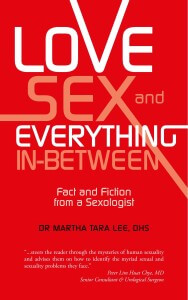
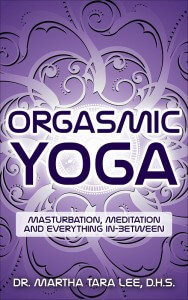
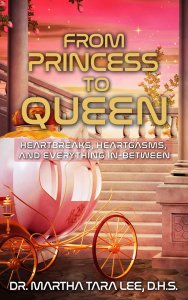
An accomplished author, Dr. Lee has published four books: Love, Sex and Everything In-Between (2013), Orgasmic Yoga: Masturbation, Meditation and Everything In-Between (2015), From Princess to Queen: Heartbreaks, Heartgasms and Everything In-Between (2017), and {Un}Inhibited (2019). Her contributions have been recognized with numerous honors, including Her World’s Top 50 Inspiring Women under 40 (2010), CozyCot’s Top 100 Inspiring Women (2011), Global Woman of Influence (2024), the Most Supportive Relationship Coach (Singapore Business Awards, APAC Insider, 2025), and the Icon of Change International Award (2025).
You can read the testimonials she’s received over years here. For her full profile, click here. Email her here.