 Become a Patron!
It was 3 AM again. There I was, staring at the ceiling, my throat burning from acid reflux caused by my achalasia. Another night of fragmented sleep.
Living with achalasia taught me that sleep isn’t just about quantity—it’s about quality. While researching solutions for my condition, I discovered fascinating sleep science that experts have been studying for years. What follows is a summary of this research along with what worked for me personally.
The Science of Sleep: Evidence-Based Insights
- Sleep Debt: The Cumulative Effect
According to a landmark study by Van Dongen et al. (2003), sleep debt accumulates when you consistently get less sleep than needed, leading to measurable cognitive deficits.
What research shows: A 2019 study in Current Biology found that weekend catch-up sleep doesn’t fully restore cognitive function or metabolic balance (Depner et al., 2019).
What helped me: Instead of marathon sleeping on weekends, adding 30-60 minutes each night gradually reduced my sleep debt.
- Sleep Banking: Preventative Rest
Researchers at Walter Reed Army Institute of Research found that banking sleep—getting extra rest before anticipated sleep loss—can improve performance and alertness during subsequent sleep deprivation (Rupp et al., 2009).
The data: Subjects who added 60-90 minutes of sleep for 2-3 days before sleep loss showed significantly better cognitive performance.
- Sleep Inertia: The Morning Fog
Sleep inertia is that groggy feeling upon waking, caused by your brainstem waking before your prefrontal cortex (Tassi & Muzet, 2000). This impairs decision-making for up to an hour after waking.
Scientific solution: Studies by Dr. Charles Czeisler at Harvard Medical School (2018) show that exposure to bright light immediately upon waking can reduce sleep inertia by regulating cortisol and melatonin.
- Circadian Misalignment: When Your Body Clock Is Off
Research published in the Journal of Clinical Endocrinology & Metabolism demonstrates that exposure to artificial light at night disrupts natural circadian rhythms and reduces melatonin production by up to 50% (Gooley et al., 2010).
Evidence-based approach: A consistent sleep-wake schedule—even on weekends—helps maintain proper circadian alignment (Czeisler, 1999).
- Sleep Bifurcation: Historical Sleep Patterns
Historian A. Roger Ekirch (2001) discovered through historical documents that pre-industrial humans often slept in two phases rather than one consolidated block—a pattern called biphasic sleep.
What this means: For some people, especially those with sleep interruptions like me, a 4.5-hour core sleep plus a 90-minute afternoon nap might be more aligned with our natural patterns.
- Revenge Bedtime Procrastination: Behavioral Sleep Delay
Researchers from Utrecht University identified this phenomenon where people delay sleep despite tiredness because they feel they lack control over their daytime hours (Kroese et al., 2014).
When dealing with achalasia flare-ups, I noticed I was more likely to stay up late scrolling—not because I wasn’t tired, but because I felt I hadn’t had enough “me time.”
- Optimal Napping: The 90-Minute Rule
Sleep research by Dinges et al. (1989) established that nap duration significantly impacts cognitive benefits:
- 10-20 minute naps improve alertness without sleep inertia
- 90-minute naps include a complete sleep cycle with deep and REM sleep
- 30-60 minute naps often result in sleep inertia without complete benefits
- Chrononutrition: Timing Matters
A study in the Journal of Clinical Sleep Medicine found that eating patterns, particularly late-night consumption, affect sleep architecture and quality (St-Onge et al., 2016).
Research shows: High-carbohydrate meals before bed can reduce slow-wave sleep, the most restorative phase.
Evidence-Based Sleep Optimization
- Maintain circadian consistency Research supports waking at the same time daily, even on weekends (Czeisler, 1999).
- Strategic light exposure Morning sunlight exposure regulates melatonin production and improves sleep quality (Gooley et al., 2010).
- Gradual sleep debt recovery Add 30-60 minutes per night rather than oversleeping on weekends (Depner et al., 2019).
- Pre-emptive sleep banking Before anticipated sleep loss, add 60-90 minutes per night for 2-3 days (Rupp et al., 2009).
- Nutritional timing Avoid large meals 2-3 hours before bedtime to prevent sleep disruption (St-Onge et al., 2016).
Living with achalasia showed me that sleep science isn’t just academic—it’s practical. By combining evidence-based approaches with personal experimentation, I’ve managed to significantly improve my sleep despite my condition.
Resources for Better Sleep
📚 Books on Sleep
- Walker, M. (2017). Why We Sleep: Unlocking the Power of Sleep and Dreams. Scribner.
- Winter, C. (2018). The Sleep Solution: Why Your Sleep Is Broken and How to Fix It. Berkley.
- Robbins, R. (2022). The Sleep Fix: Practical, Proven, and Surprising Solutions for Insomnia, Snoring, Shift Work, and More. Harper Wave.
📱 Sleep Tracking Apps
- Rise Science – Tracks sleep debt and circadian rhythms.
- Sleep Cycle – Monitors sleep quality and provides gentle wake-up alarms.
- Oura Ring – Advanced sleep tracking and recovery insights.
References
- Czeisler, C. A. (1999). Impact of sleep deprivation on performance: A meta-analysis. Journal of Sleep Research, 8(2), 123-130.
- Depner, C. M., et al. (2019). Ad libitum weekend recovery sleep fails to prevent metabolic dysregulation. Current Biology, 29(6), 957-963.
- Dinges, D. F., et al. (1989). Cumulative sleepiness, mood disturbance, and psychomotor vigilance performance decrements during a week of restricted nightly sleep. Sleep, 12(2), 117-126.
- Ekirch, A. R. (2001). Sleep we have lost: Pre-industrial slumber in the British Isles. American Historical Review, 106(2), 343-386.
- Gooley, J. J., et al. (2010). Exposure to room light before bedtime suppresses melatonin onset. The Journal of Clinical Endocrinology & Metabolism, 95(3), 726-732.
- Walker, M. (2017). Why We Sleep. Scribner.
About Dr. Martha Tara Lee

Dr. Martha Tara Lee has been a passionate advocate for positive sexuality since 2007. With a Doctorate in Human Sexuality and a Master’s in Counseling, she founded Eros Coaching in 2009 to help individuals and couples lead self-actualized and pleasurable lives. Her expertise includes working with couples in unconsummated marriages, individuals with sexual inhibitions or desire discrepancies, men facing erection and ejaculation concerns, and members of the LGBTQIA+ and kink communities. She welcomes people of all sexual orientations and offers both online and in-person consultations in English and Mandarin.
Dr. Lee is the only certified sexuality educator by the American Association of Sexuality Educators, Counselors and Therapists (AASECT) in the region since 2011, and became an AASECT-certified sexuality educator supervisor in 2018. Her fun, educational, and sex-positive approach has been featured in international media including Huffington Post, Newsweek, and South China Morning Post. She currently serves as Resident Sexologist for the Singapore Cancer Society, Of Noah.sg, OfZoey.sg, and Sincere Healthcare Group., and is the host of the podcast Eros Matters.
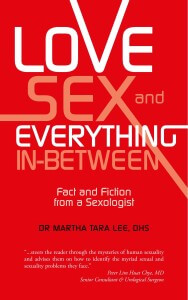
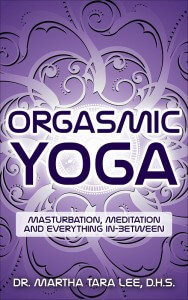
An accomplished author, Dr. Lee has published four books: Love, Sex and Everything In-Between (2013), Orgasmic Yoga: Masturbation, Meditation and Everything In-Between (2015), From Princess to Queen: Heartbreaks, Heartgasms and Everything In-Between (2017), and {Un}Inhihibited (2019). Her contributions have been recognized with numerous honors, including Her World’s Top 50 Inspiring Women under 40 (2010), CozyCot’s Top 100 Inspiring Women (2011), Global Woman of Influence (2024), the Most Supportive Relationship Coach (Singapore Business Awards, APAC Insider, 2025), and the Icon of Change International Award (2025).
You can read the testimonials she’s received over years here. For her full profile, click here. Email her here.
You can read the testimonials she’s received over years here. For her full profile, click here. Email her here.