 Become a Patron!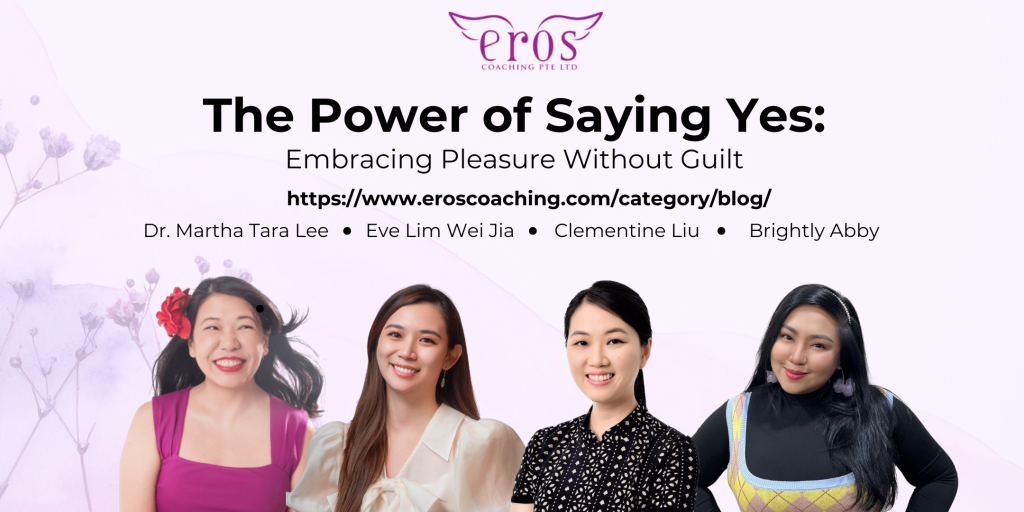
We spend so much time learning to say “no”—and for good reason. Boundaries matter. Protecting our time, energy, and well-being is essential. For many women, especially Asian women, assertiveness training is transformative work, undoing years of being taught to accommodate, to please, to stay quiet.
But there’s another side to this work that’s rarely discussed: learning to say “yes.”
Not yes to demands. Not yes out of obligation. But yes to desire. Yes to pleasure. Yes to ourselves—without guilt, without apology, without needing to earn it first.
Across cultures, pleasure—especially women’s pleasure—has been treated as something suspicious. Indulgent. Dangerous. To be controlled, minimized, or moralized. We’re told desire is acceptable only in certain contexts, in service of others, and in measured amounts. These messages shape us quietly but powerfully, creating internal barriers that persist long after we’ve intellectually rejected them.
In this piece, four women—Dr. Martha Tara Lee (Singapore), Eve Lim Wei Jia (Malaysia), Brightly Abby (Philippines), and Clementine Liu (China)—explore what it means to move from guilt to permission, from restraint to embodied choice. Their reflections offer different perspectives on the same essential question: How do we reclaim pleasure as something we own, not something we have to earn?
 Brightly Abby – Ditching the Diet Mentality Around Pleasure
We’re raised to treat pleasure like dessert—earn it first, don’t overindulge, and definitely feel guilty after. But what if we ditched the diet mentality and made pleasure the main course? No shame, just a full, delicious feast of joy!
How do societal views on guilt and pleasure affect our intimacy?
Society has been acting like the pleasure police for centuries—ticketing anyone who dares to enjoy themselves without guilt! We’ve been fed this ridiculous idea that sex is either “sacred” or “sinful,” like there’s no in-between where it’s just fun. Women, especially, get told to be “classy, not trashy,” while men are basically handed a gold medal for even thinking about sex. The result? People end up treating pleasure like a cheat meal—sneaking it in, feeling guilty after, and promising to “do better” next time. Instead of fully enjoying intimacy, we’re stuck in our heads, analyzing if we should be turned on instead of just being turned on.
What holds people back from saying “yes” to their sexual desires without guilt?
Honestly? A lifetime of mixed signals. Society basically raised us like, “Sex is bad… until you’re married. But not too much! But also, you should be good at it. But not too good—where’d you learn that?” It’s a mess.
Religious guilt, cultural expectations, judgmental aunties at family gatherings—there’s a whole list of things that make people hesitate before going full yes, please on their desires. And let’s not forget personal insecurities. If someone has ever been shamed for what they like (“You want what?!”), they’re gonna hesitate before bringing it up again. So, people stay quiet, pretend to be vanilla when they’re secretly rocky road, and end up missing out on some five-star experiences.
But here’s the truth: Desire is not selfish. It’s human.
How can we overcome negative conditioning and embrace joy in our sexual lives?
Reclaiming pleasure starts with permission. And no, I don’t mean permission from society, from a partner, or from an invisible rulebook—I mean from yourself.
- Reframe the Narrative – Instead of seeing pleasure as indulgence, see it as nourishment. You don’t question the need to eat, sleep, or breathe—why should pleasure be any different?
- Unlearn the Guilt – Recognize where your shame comes from. Whose voice is telling you that pleasure is wrong? And does that voice actually belong to you?
- Say Yes—Fully and Freely – Saying yes to pleasure means saying yes to yourself. Whether it’s self-exploration, partnered intimacy, or just the joy of feeling good in your own skin—give yourself permission to experience without the weight of guilt.
Normalize pleasure—stop treating sex like a crime scene! Guilt doesn’t belong in the bedroom… unless that’s your kink.
Because at the end of the day, pleasure isn’t something you have to earn. It’s something you own. And when you finally embrace that? That’s when you step into your full, unapologetic power.
Eve Lim Wei Jia – Breaking Free from Internalized Shame
 One of the biggest barriers to embracing pleasure is internalized shame. This shame can stem from cultural upbringing, religious teachings, or personal experiences. For example, someone raised in a strict household where sex was never discussed or only talked about in negative terms might feel guilty for even having sexual thoughts, let alone acting on them. If they were taught that sex before marriage is sinful, they may experience deep anxiety or self-judgment after being intimate with a partner, even if it was consensual and enjoyable.
Another example is how women, in particular, are often conditioned to believe that their sexuality is for someone else’s benefit rather than their own. Many grow up hearing things like “Don’t give yourself away too easily” or “A man won’t respect you if you sleep with him too soon.” These messages suggest that sex is transactional, as something a woman gives to a deserving partner rather than an experience she enjoys for herself. As a result, even when a woman wants to explore her desires, she might hesitate, fearing judgment or feeling like she’s doing something wrong.
To overcome the negative conditioning, I believe a good starting point is to reflect on where our beliefs about sex and pleasure come from. Ask yourself: Do I truly believe this, or was I taught to think this way? If guilt arises after experiencing pleasure, try to pinpoint its root cause. Is it fear of judgment? A lingering belief that sex must always have a deeper meaning? Recognizing these patterns is the first step in helping us break free from them.
Additionally, the media and cultural influences we consume matter. Reading books about sex-positivity, listening to podcasts that normalize pleasure, or even engaging in open conversations with friends about intimacy can help shift our perspective. When we see and hear others embracing their desires without guilt, it becomes easier to do the same!
Clementine Liu – The Shift from “No” to “Yes”
 As psychotherapists, we often work with clients on learning how to say “no” in relationships. The goal is usually assertiveness—helping them set boundaries, protect their time and energy, and honour their own needs.
For many women, especially Asian women, this work is long overdue. From a young age, we are often taught to prioritise others, to be accommodating, to suppress discomfort, and to avoid being “difficult.” Over time, the ability to say “no” erodes. We give more than we can sustain—emotionally, mentally, relationally—often at the expense of ourselves.
But as a psychotherapist trained in sexuality, there are moments when the work moves in a seemingly opposite direction: helping clients learn how to say “yes.”
At first glance, this sounds contradictory. It isn’t.
Growing up in many Asian societies, sex and desire—especially women’s desire—are frequently framed as shameful, sinful, or morally suspect. I still remember a boy in my primary school who shared that he had seen his parents kissing. Instead of curiosity or normalisation, he was met with laughter and ridicule, and the teasing followed him for years. This was not an isolated incident; it reflected a broader cultural discomfort with intimacy itself.
Women’s desire is judged even more harshly. In literature, television, and film, a woman who openly desires sex is often labelled as “lustful,” “shameless,” or morally loose. These narratives quietly but powerfully shape us. Over time, many women learn not to express desire, not to communicate preferences, and not to enjoy sex for themselves. Intimacy becomes a duty, a chore, a responsibility—something to maintain the relationship rather than something mutually nourishing.
Yet sex, at its core, is a deeply human and potentially beautiful experience. It is meant to be shared, consensual, and pleasurable for all involved.
Without comprehensive and accurate sex education, many people learn about sex through fragmented sources—media, pornography, hearsay, or imagination. As a result, partners may genuinely want to connect but lack the knowledge or language to do so without discomfort or even harm.
This is where the power of saying “yes” comes in.
The first “yes” we encourage is not directed at a partner, but at oneself.
For clients who are open to it, this means saying yes to self-exploration—at their own pace, in a space where they feel safe, grounded, and unhurried. It is about curiosity rather than performance, presence rather than pressure. Through this process, self-awareness grows. The body becomes less foreign, less silent, less something to endure.
When we understand our own bodies better, intimacy no longer depends on guesswork. We become more able to communicate clearly with our partners—naming what feels good, what feels uncomfortable, and where our boundaries lie. Desire does not need to be hidden or suppressed; it can be expressed openly and respectfully. Pleasure becomes something that is consciously co-created through communication, rather than silently endured or negotiated through obligation. Over time, intimacy shifts from “doing it because I should” to “choosing it because I want to,” supported by consent, clarity, and mutual trust.
Learning to say “yes” in this way is not about excess or indulgence. It is about reclaiming agency, dignity, and embodied self-trust.
These are my two cents—but for many, they are a starting point.
Dr. Martha Tara Lee – Choosing Freely, Consciously, Without Shame
 Much of my work focuses on helping people unlearn shame around desire. But those of us who educate and support others must also continue our own internal work around pleasure and embodiment.
Why is pleasure so often linked to guilt, especially for women?
Across many cultures—particularly in Asian contexts—pleasure is framed as something to be earned, controlled, or restrained. It’s portrayed as bad, addictive, or dangerous. Women’s desire is often moralized: acceptable only in certain contexts, in service of others, and in measured amounts.
These messages are rarely explicit but deeply persistent. This conditioning doesn’t disappear because someone is educated or professionally trained—it requires ongoing awareness.
How does this conditioning show up?
Cultural expectations, religious teachings, family messaging, and past judgment all leave marks. When desire has been dismissed or punished—even subtly—people learn to hesitate. Saying “yes” can feel risky or selfish, even when consent and trust are present.
Sex is portrayed as dangerous yet people are expected to be responsive and confident. These contradictions create self-monitoring instead of presence.
How do we relearn to say “yes”?
The first “yes” is not to others. It’s to ourselves—and we need to relearn this, because our happiness, well-being, and even survival depend on it.
Many of us have been taught to prioritize everyone else’s needs first. Prioritizing ourselves isn’t selfish; it’s essential.
Pleasure is healing. It resets the nervous system, offers moments of ecstasy, and teaches us to be gentle with ourselves. But it’s a practice—you start small, build progressively, and return to it often.
This means allowing curiosity instead of judgment, listening to bodily responses, and permitting pleasure without controlling it. When people understand their responses, they communicate clearly, set boundaries confidently, and engage by choice rather than obligation.
What shifts?
When pleasure is no longer earned or endured, intimacy becomes less performative and more collaborative. Desire can be named. Discomfort expressed. Consent becomes ongoing and relational.
Intimacy shifts from “I should” to “I choose,” grounded in self-trust and mutual respect.
Working with sexuality doesn’t exempt us from cultural conditioning. Learning to say “yes” isn’t about abandoning boundaries—it’s about choosing freely, consciously, and without shame.
The Permission We’ve Been Waiting For
Learning to say “yes” to pleasure isn’t about rejecting boundaries or abandoning responsibility. It’s about recognizing that desire, joy, and embodiment are not things we need to earn or apologize for. They are part of being human.
For these four women, reclaiming pleasure has meant different things—questioning inherited beliefs, challenging cultural narratives, building self-awareness, and giving themselves permission to feel without guilt. But the thread connecting their stories is clear: pleasure becomes possible when we stop treating it as something dangerous and start treating it as something we deserve.
You don’t need anyone’s permission to say yes to yourself. But if hearing these stories makes it easier, consider this your reminder: your desire is valid. Your pleasure matters. And the journey to reclaiming both is one worth taking.
🌿 Your healing journey starts with one step. You don’t have to walk it alone.
No matter where you are in your journey, support is available. Connect with us:
🔹 Dr. Martha Tara Lee – www.ErosCoaching.com/profile
🔹 Eve Lim Wei Jia – https://americanboardofsexology.org/sexologist/eve-wei-jia-lim/
🔹 Brightly Abby – brightlyabby.com
🔹 Ms. Clementine Liu – UnderneathTheMoon.com
✨ Your journey to healing, self-discovery, and empowerment is valid. You deserve support, understanding, and the freedom to explore your sexuality without shame.