 Become a Patron!
Grief is one of the most profound human experiences, touching every aspect of our emotional, physical, and psychological well-being. As a relationship counselor and clinical sexologist, I have worked with individuals who have faced grief in many forms—losing a partner to death or illness, coming to terms with their own declining health, or mourning the loss of their sexuality due to illness, cancer, or other life-altering changes. Understanding what grief is, how it differs from sadness, and how we can navigate it with compassion is crucial to healing and moving forward.
What is Grief?
Grief is a deep emotional response to loss. It is not just sadness; it is a complex mixture of emotions that can include sorrow, anger, guilt, relief, numbness, and confusion (Bonanno, 2009). Unlike sadness, which is often a reaction to a specific event and tends to pass with time, grief is more profound and can reshape one’s identity, worldview, and future expectations (Stroebe & Schut, 1999). It is not linear; instead, it fluctuates, sometimes resurfacing years after a loss.
The Psychology of Grief: How It Affects Us
Grief impacts us on multiple levels—emotionally, mentally, and even physically. Some key psychological effects include:
- Cognitive Disturbances: Difficulty concentrating, memory lapses, and a sense of disorientation are common (Maccallum & Bryant, 2013).
- Emotional Rollercoaster: Grief is not just about sadness—it can involve moments of anger, guilt, relief, or even joy when reminiscing about positive memories (Worden, 2018).
- Physical Symptoms: Fatigue, headaches, changes in appetite, and sleep disturbances are common bodily responses to grief (Hall, 2014).
- Social Withdrawal: Many grieving individuals isolate themselves, feeling that others cannot fully understand their loss or fearing that they may burden others (Parkes & Prigerson, 2013).
Grief can also disrupt relationships. Couples who experience the death of a child or a partner’s serious illness often struggle with intimacy and connection, as their emotional energy is consumed by loss (Neimeyer, 2011).
Types of Grief: Beyond Death and Dying
While the loss of a loved one is the most recognized form of grief, it manifests in many other ways:
- Anticipatory Grief: The grief experienced before an expected loss, such as when a partner is terminally ill (Rando, 2000).
- Complicated Grief: A prolonged and intense form of grief that disrupts daily life for months or even years (Shear et al., 2011).
- Disenfranchised Grief: Grief that society does not recognize as legitimate, such as mourning the loss of sexuality due to cancer or chronic illness (Doka, 2002).
- Self-Grief: The mourning of one’s own declining health, abilities, or impending death (Kübler-Ross & Kessler, 2005).
Grieving the Loss of Sexuality
For many, sexuality is deeply intertwined with identity, intimacy, and self-worth. Illnesses such as cancer, menopause, or neurological disorders can result in hormonal changes, body image issues, or physical limitations that alter one’s sexual experience (Brotto et al., 2016).
This form of grief is rarely discussed but is just as profound. Loss of desire, painful intercourse, or changes in physical arousal can lead to feelings of inadequacy, shame, or disconnection from one’s partner (Perz et al., 2014). Navigating this grief requires both practical solutions—such as medical interventions, therapy, or alternative forms of intimacy—and deep self-compassion.
Coping Mechanisms for Grief
Although grief is deeply personal, there are strategies that can help in processing loss and finding meaning again:
- Allow Yourself to Feel: Suppressing emotions can prolong grief. Journaling, talking to a trusted friend, or seeking therapy can provide a safe space for expression (Stroebe & Schut, 2001).
- Seek Support: Isolation can intensify grief. Support groups, therapy, or simply reaching out to loved ones can create a sense of shared understanding (Neimeyer, 2011).
- Practice Self-Compassion: Grieving individuals often criticize themselves for “not moving on fast enough.” Remind yourself that healing has no timeline and that all emotions are valid (Neff, 2011).
- Engage in Rituals: Lighting a candle, writing letters to the deceased, or creating a memory book can help maintain a connection while also allowing space for closure (Worden, 2018).
- Redefine Sexuality and Intimacy: If illness or loss has changed your sexual identity, explore alternative forms of connection—sensual touch, deep conversations, or non-penetrative intimacy (Perz et al., 2014).
- Physical Well-being: Exercise, mindful breathing, and proper nutrition can ease physical symptoms of grief, supporting emotional resilience (Hall, 2014).
- Professional Guidance: Seeking help from a therapist, sexologist, or counselor can provide personalized coping strategies and a space for exploration without judgment (Bonanno, 2009).
Healing and Moving Forward
Grief never fully disappears, but it evolves. The goal is not to “get over it” but to integrate the experience into a new version of life. Loss changes us, but it does not have to define us in suffering. Healing comes in small steps—through connection, self-care, and allowing space for new joys.
If you are struggling with grief, especially grief related to intimacy or sexuality, you do not have to go through this alone. As a relationship counselor and clinical sexologist, I offer a safe, supportive space to help you process your emotions, rebuild your confidence, and rediscover connection. Whether you’re grieving the loss of a loved one, your health, or aspects of your sexuality, I can provide guidance and strategies to help you heal.
Take the first step toward healing today. Book a session with me, Dr. Martha Tara Lee, to explore how we can work together on your journey toward emotional and sexual well-being.
References
- Bonanno, G. A. (2009). The other side of sadness: What the new science of bereavement tells us about life after loss. Basic Books.
- Brotto, L. A., Yule, M. A., & Breckon, E. (2016). Psychological interventions for the sexual sequelae of cancer: A review of the literature. Journal of Cancer Survivorship, 10(4), 844–855. https://doi.org/10.1007/s11764-016-0527-4
- Doka, K. J. (2002). Disenfranchised grief: Recognizing hidden sorrow. Lexington Books.
- Hall, M. (2014). Bereavement and physical health: Consequences, mechanisms, and interventions. Psychosomatic Medicine, 76(2), 98–110. https://doi.org/10.1097/PSY.0000000000000017
- Kübler-Ross, E., & Kessler, D. (2005). On grief and grieving: Finding the meaning of grief through the five stages of loss. Scribner.
- Maccallum, F., & Bryant, R. A. (2013). A cognitive attachment model of prolonged grief: Integrating attachments, memory, and identity. Clinical Psychology Review, 33(6), 713–727. https://doi.org/10.1016/j.cpr.2013.05.001
- Neff, K. D. (2011). Self-compassion: The proven power of being kind to yourself. HarperCollins.
- Neimeyer, R. A. (2011). Techniques of grief therapy: Creative practices for counseling the bereaved. Routledge.
- Parkes, C. M., & Prigerson, H. G. (2013). Bereavement: Studies of grief in adult life. Routledge.
- Perz, J., Ussher, J. M., & Gilbert, E. (2014). Feeling well and talking about sex: Psycho-social predictors of sexual functioning after cancer. BMC Cancer, 14(1), 228. https://doi.org/10.1186/1471-2407-14-228
- Stroebe, M., & Schut, H. (1999). The dual process model of coping with bereavement. Death Studies, 23(3), 197–224. https://doi.org/10.1080/074811899201046
About Dr. Martha Tara Lee

Dr. Martha Tara Lee has been a passionate advocate for positive sexuality since 2007. With a Doctorate in Human Sexuality and a Master’s in Counseling, she founded Eros Coaching in 2009 to help individuals and couples lead self-actualized and pleasurable lives. Her expertise includes working with couples in unconsummated marriages, individuals with sexual inhibitions or desire discrepancies, men facing erection and ejaculation concerns, and members of the LGBTQIA+ and kink communities. She welcomes people of all sexual orientations and offers both online and in-person consultations in English and Mandarin.
Dr. Lee is the only certified sexuality educator by the American Association of Sexuality Educators, Counselors and Therapists (AASECT) in the region since 2011, and became an AASECT-certified sexuality educator supervisor in 2018. Her fun, educational, and sex-positive approach has been featured in international media including Huffington Post, Newsweek, and South China Morning Post. She currently serves as Resident Sexologist for the Singapore Cancer Society, Of Noah.sg, OfZoey.sg, and Sincere Healthcare Group, and is the host of the podcast Eros Matters.
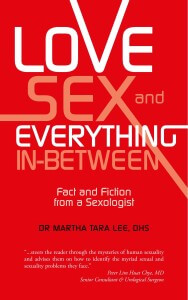
An accomplished author, Dr. Lee has published four books: Love, Sex and Everything In-Between (2013), Orgasmic Yoga: Masturbation, Meditation and Everything In-Between (2015), From Princess to Queen: Heartbreaks, Heartgasms and Everything In-Between (2017), and {Un}Inhibited (2019). Her contributions have been recognized with numerous honors, including Her World’s Top 50 Inspiring Women under 40 (2010), CozyCot’s Top 100 Inspiring Women (2011), Global Woman of Influence (2024), the Most Supportive Relationship Coach (Singapore Business Awards, APAC Insider, 2025), and the Icon of Change International Award (2025).
You can read the testimonials she’s received over years here. For her full profile, click here. Email her here.