 Become a Patron!
Over the years, I’ve heard countless clients share how much a kiss matters. For some, it’s the spark that draws them closer. For others, it’s a source of worry: Am I doing it right? Do they like it? The truth is, kissing isn’t about perfection. It’s about presence, sensitivity, and care.
A kiss is one of the simplest yet most meaningful ways we communicate affection and desire. Here are 13 ways to think about kissing that may help you approach it with more confidence and joy.
1. Start with Consent
The most powerful kisses are the ones both people want. Asking “Can I kiss you?” or slowing down enough to give your partner time to respond can turn nervousness into anticipation. Research confirms that mutual agreement increases comfort and enjoyment (Beres, 2014).
Consent doesn’t kill the mood — it often heightens it. A whisper, a smile, or an inviting pause can make the moment more intimate, not less.
2. Don’t Rush
Many people worry about technique, but pacing matters more than skill. Kisses that start gently and build gradually often feel more satisfying. Anticipation is one of the strongest drivers of desire (Prause & Janssen, 2006).
Instead of diving straight in, linger. Brush your lips softly, then pull back before leaning in again. The pauses are as powerful as the kisses themselves.
3. Make Your Lips Kiss-Ready
Soft lips aren’t about vanity — they’re about comfort. Dry or cracked lips can distract from connection. Hydration, simple lip care, or a touch of balm can help.
It’s a small act of self-care that makes you feel more confident and helps your partner enjoy the experience too.
4. Fresh Breath Builds Ease
This is one of the most common anxieties I hear from clients. Fresh breath can ease self-consciousness and make intimacy more relaxed.
Oral hygiene matters, but so does being thoughtful: rinsing, a mint, or even chewing gum before meeting a partner shows care. When you’re not worrying about your breath, you’re free to be present.
5. Learn the Language of Tongue
Some people love more tongue; others prefer very little. Neither is right or wrong — what matters is paying attention.
Introduce it slowly. If your partner opens toward you, leans in, or responds positively, you can deepen. If they pull back, lighten up. Tongue isn’t a “technique” — it’s a way of tuning into your partner’s cues.
6. Hands Tell Their Own Story
A kiss can feel very different depending on where your hands are. Cradling the face communicates tenderness; resting on the waist feels grounding; stroking the back of the neck adds intensity.
Touch also releases oxytocin, which supports bonding (Uvnas-Moberg, 1998). Small, intentional touches can deepen a kiss far beyond the lips.
7. Pay Attention to Rhythm
One of the most common worries clients raise is: “What if I don’t know what my partner likes?” The answer lies in responsiveness.
Notice their rhythm — are they slowing down, pressing harder, pulling away? Adjusting to your partner builds harmony (Burgoon, Guerrero, & Floyd, 2016). A kiss works best when it feels like a dialogue, not a performance.
8. Keep It Fresh
Kissing can fall into habit, especially in long-term relationships. A simple shift — moving from lips to cheek, jawline, or neck — can break the routine.
Novelty keeps intimacy alive. Research shows variety and surprise strengthen satisfaction in long-term couples (Muise, Schimmack, & Impett, 2016). Even small changes can make familiar kisses feel new again.
9. Let Your Eyes Speak
Pausing to look at your partner can intensify a kiss. Eye contact is linked with increased dopamine and stronger emotional connection (Kleinke, 1986).
It doesn’t have to be prolonged — sometimes a brief, soft look before leaning back in can feel incredibly intimate.
10. Say What You Like
Words can make kissing more enjoyable. Telling your partner, “I love your lips,” or “That feels amazing,” reinforces what’s working and builds confidence.
Research shows that affirming expressions strengthen bonds (Gottman & Silver, 2015). Honest feedback — given with warmth — turns a kiss into an even richer experience.
11. Don’t Underestimate Stillness
Kissing isn’t always about movement. Resting lips together, sharing breath, or simply pausing can feel deeply connecting.
Quiet moments allow both people to sink into presence. Often, the simplest kisses linger longest in memory.
12. Explore Intensity Safely
Some people enjoy stronger kisses, playful nibbling, or being held close. For others, those same things may feel uncomfortable.
The difference lies in communication. Try saying: “Would you like me to kiss you harder?” or “How does this feel?” Studies show that when couples explore intensity with consent, satisfaction increases (Herbenick et al., 2017).
Intensity should always be an invitation, not a surprise.
13. Adapt Across Time and Culture
Kissing isn’t the same for everyone. A first kiss can feel nerve-wracking; long-term couples may rediscover kissing as a way to reconnect. Age and energy levels also influence what feels right.
Culture matters too. In some societies, kissing is casual and public; in others, it is private and erotic. Respecting those differences makes kissing more thoughtful and inclusive (Wlodarski & Dunbar, 2013).
Final Thoughts
Kissing is not about performance — it’s about presence and responsiveness. The best kisses happen when both partners feel safe, curious, and connected.
If you’d like to explore this more deeply, I invite you to join my virtual recorded workshop: The Art of Kissing, hosted by Eros Coaching. Together, we’ll look at practical skills, communication strategies, and ways to make kissing a source of confidence and joy at every stage of life.
👉 Learn more about our services at ErosCoaching.com
References
- Beres, M. A. (2014). Rethinking the concept of consent for anti-sexual violence activism and education. Feminism & Psychology, 24(3), 373–389. https://doi.org/10.1177/0959353514539652
- Burgoon, J. K., Guerrero, L. K., & Floyd, K. (2016). Nonverbal communication. Routledge.
- Field, T. (2010). Touch for socioemotional and physical well-being: A review. Developmental Review, 30(4), 367–383. https://doi.org/10.1016/j.dr.2011.01.001
- Floyd, K., Boren, J. P., Hannawa, A. F., Hesse, C., McEwan, B., & Veksler, A. E. (2009). Kissing in marital and cohabiting relationships: Effects on blood lipids, stress, and relationship satisfaction. Western Journal of Communication, 73(2), 113–133. https://doi.org/10.1080/10570310902856071
- Gottman, J., & Silver, N. (2015). The seven principles for making marriage work. Harmony.
- Herbenick, D., Bowling, J., Fu, T. C., Dodge, B., Guerra-Reyes, L., & Sanders, S. (2017). Sexual diversity in the United States: Results from a nationally representative probability sample of adult women and men. PLOS ONE, 12(7), e0181198. https://doi.org/10.1371/journal.pone.0181198
- Kleinke, C. L. (1986). Gaze and eye contact: A research review. Psychological Bulletin, 100(1), 78–100. https://doi.org/10.1037/0033-2909.100.1.78
- Muise, A., Schimmack, U., & Impett, E. A. (2016). Sexual frequency predicts greater well-being, but more is not always better. Social Psychological and Personality Science, 7(4), 295–302. https://doi.org/10.1177/1948550615616462
- Prause, N., & Janssen, E. (2006). Blood flow and sexual response: An experimental paradigm for understanding sexual arousal. Archives of Sexual Behavior, 35(3), 265–276. https://doi.org/10.1007/s10508-006-9022-2
- Uvnas-Moberg, K. (1998). Oxytocin may mediate the benefits of positive social interaction and emotions. Psychoneuroendocrinology, 23(8), 819–835. https://doi.org/10.1016/S0306-4530(98)00056-0
- Wlodarski, R., & Dunbar, R. I. M. (2013). Examining the possible functions of kissing in romantic relationships. Archives of Sexual Behavior, 42(5), 785–793. https://doi.org/10.1007/s10508-012-0053-6
About Dr. Martha Tara Lee

Dr. Martha Tara Lee has been a passionate advocate for positive sexuality since 2007. With a Doctorate in Human Sexuality and a Master’s in Counseling, she founded Eros Coaching in 2009 to help individuals and couples lead self-actualized and pleasurable lives. Her expertise includes working with couples in unconsummated marriages, individuals with sexual inhibitions or desire discrepancies, men facing erection and ejaculation concerns, and members of the LGBTQIA+ and kink communities. She welcomes people of all sexual orientations and offers both online and in-person consultations in English and Mandarin.
Dr. Lee is the only certified sexuality educator by the American Association of Sexuality Educators, Counselors and Therapists (AASECT) in the region since 2011, and became an AASECT-certified sexuality educator supervisor in 2018. Her fun, educational, and sex-positive approach has been featured in international media including Huffington Post, Newsweek, and South China Morning Post. She currently serves as Resident Sexologist for the Singapore Cancer Society, Of Noah.sg, OfZoey.sg, and Sincere Healthcare Group, and is the host of the podcast Eros Matters.
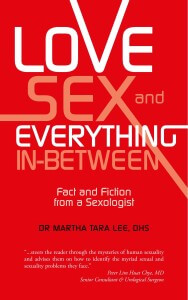
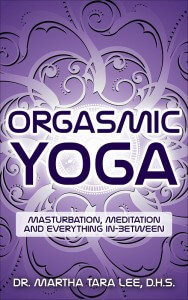
An accomplished author, Dr. Lee has published four books: Love, Sex and Everything In-Between (2013), Orgasmic Yoga: Masturbation, Meditation and Everything In-Between (2015), From Princess to Queen: Heartbreaks, Heartgasms and Everything In-Between (2017), and {Un}Inhihibited (2019). Her contributions have been recognized with numerous honors, including Her World’s Top 50 Inspiring Women under 40 (2010), CozyCot’s Top 100 Inspiring Women (2011), Global Woman of Influence (2024), the Most Supportive Relationship Coach (Singapore Business Awards, APAC Insider, 2025), and the Icon of Change International Award (2025).
You can read the testimonials she’s received over years here. For her full profile, click here. Email her here.