 Become a Patron!
Sexual wellness directly affects mental health and overall well-being in ways many of us fail to recognize. We often compartmentalize these aspects of our lives, but our intimate experiences profoundly shape our self-worth, relationships, and stress levels. True sexual empowerment transcends technique—it encompasses self-awareness, communication, and liberation from shame. It extends beyond libido or performance to emotional connection, body confidence, and embracing pleasure in all its forms. Most importantly, there is no universal “normal”—only what feels right for you.
According to a comprehensive study published in the Journal of Sex & Marital Therapy, individuals who report higher sexual satisfaction also demonstrate significantly better psychological well-being and life satisfaction (Stephenson & Meston, 2015). Yet our conversations about sexual wellness often remain superficial or taboo. This blog challenges conventional wisdom with research-backed perspectives that might change how you think about intimacy, ranked from most to least common misconceptions.
1. Sex Education Should Include Pleasure, Not Just Reproduction and Risk
Perhaps the most pervasive issue affecting sexual wellness is inadequate education. A UNESCO review of sex education programs found that comprehensive approaches that include positive aspects of sexuality lead to later sexual debut, increased contraceptive use, and healthier relationships (UNESCO, 2018).
Despite this evidence, only 17 states in the U.S. require sex education to be medically accurate, and fewer than half address consent or healthy relationships (Guttmacher Institute, 2022). This systemic failure affects virtually everyone’s understanding of sexuality.
Dr. Lisa Damour, adolescent psychologist, notes: “When we only teach young people about the risks of sex, we fail to prepare them for the complexities of healthy sexual relationships” (Damour, 2020).
2. Orgasms Aren’t the Ultimate Goal of Sex
The cultural fixation on orgasm as the marker of “successful” sex creates performance anxiety that can actually inhibit pleasure. Research in the Archives of Sexual Behavior found that individuals who focused less on orgasm as the goal reported higher overall sexual satisfaction and deeper emotional connection (Chadwick & van Anders, 2017).
This pressure-creating myth affects approximately 30% of women who rarely or never experience orgasm during partnered sexual activity (Frederick et al., 2018).
As sex therapist Dr. Laurie Mintz writes in her book Becoming Cliterate: “When we define sex as a journey rather than a destination, the entire experience becomes more satisfying” (Mintz, 2017).
3. Sexual Empowerment Isn’t Just About Confidence—It’s About Education and Unlearning Shame
A meta-analysis of studies on sexual satisfaction found that knowledge of sexuality and positive attitudes toward one’s sexuality were stronger predictors of satisfaction than confidence alone (Sánchez-Fuentes et al., 2014).
The American Sexual Health Association reports that nearly 67% of adults feel they lack adequate sexual health knowledge. This gap perpetuates shame and misinformation that confidence alone cannot overcome.
4. Men Struggle with Body Image and Sexual Performance Anxiety as Much as Women Do
While women’s body image issues receive significant attention, men’s concerns are often overlooked. Research indicates that 40-45% of men report moderate to significant dissatisfaction with their bodies, with particular concerns about penis size, muscularity, and performance (Frederick & Essayli, 2016).
Performance anxiety affects 9-25% of men and correlates with erectile difficulties, premature ejaculation, and relationship stress (Pyke, 2020). Yet these concerns receive less cultural acknowledgment or support.
5. All Sex Is Sex—Penetrative Sex Is Not the Only Valid Form of Intimacy
Research published in the Archives of Sexual Behavior found that women are significantly more likely to reach orgasm during sexual activities that include a variety of techniques beyond penetration (Frederick et al., 2018). Yet cultural messaging persistently frames penetration as the pinnacle of intimacy.
This narrow definition creates performance pressure and contributes to what researchers call the “orgasm gap”—where heterosexual women report orgasms during 65% of sexual encounters while heterosexual men report them during 95% (Frederick et al., 2018).
6. Sexual Wellness Is Not Just About Owning Sex Toys
While the sexual wellness industry has grown to an estimated $30 billion globally (Research and Markets, 2020), true sexual empowerment isn’t found in products. Studies indicate that emotional awareness and communication skills are stronger predictors of sexual satisfaction than any external aids (Jones et al., 2018).
Dr. Emily Nagoski, renowned sex educator, emphasizes in her book Come As You Are: “Sexual wellness is about context, not content. It’s about the meaning we make of our experiences, not just the experiences themselves” (Nagoski, 2015).
7. Kinks and Fantasies Are Natural, Not “Deviant”
Research published in The Journal of Sex Research revealed that the vast majority of people report having sexual fantasies, with many so-called “unusual” desires being remarkably common (Joyal et al., 2015). For instance, power dynamics and role-playing fantasies were reported by 60% of respondents.
Psychologist Dr. Justin Lehmiller’s research with over 4,000 Americans found that power dynamics, novelty, and taboo themes are among the most common fantasy categories across all demographics (Lehmiller, 2018).
8. A Lack of Desire Isn’t Always a Problem to Be “Fixed”
Despite pharmaceutical companies marketing low desire as dysfunction, fluctuations in libido are natural responses to life circumstances. The medicalization of sexuality often pathologizes normal variations, with studies finding that approximately 30% of women and 15% of men report periods of decreased sexual interest during their lifetime (Mitchell et al., 2013).
Sexual desire has responsive and spontaneous components that vary by individual and circumstance rather than adhering to a universal “normal” baseline (Basson, 2001).
9. Healing from Sexual Trauma Isn’t About “Getting Back to Normal”
Approximately 1 in 4 women and 1 in 10 men have experienced sexual violence (CDC, 2022). Recovery research shows that prescriptive approaches to resuming sexual activity can be harmful. Instead, trauma-informed care emphasizes bodily autonomy, safety, and personalized healing pathways.
Trauma specialist Dr. Judith Herman emphasizes in her landmark work Trauma and Recovery: “Recovery doesn’t happen on a timeline. It happens when survivors reclaim their sense of power and choice” (Herman, 2015).
10. Monogamy Is Not the Gold Standard for All Relationships
While less common in practice, this view challenges fundamental assumptions about relationships. Research shows that consensually non-monogamous relationships report similar levels of commitment, trust, and relationship satisfaction as monogamous ones (Conley et al., 2017). Approximately 4-5% of Americans practice some form of ethical non-monogamy (Haupert et al., 2017).
As relationship researcher Dr. Terri Conley notes, “The quality of a relationship depends on honesty, communication, and consent—not on how many people are involved” (Conley et al., 2017).
Conclusion
Our intimate lives impact our physical health, mental well-being, and sense of self in profound ways. By challenging conventional wisdom about sexual wellness, we open possibilities for more authentic, satisfying experiences that honor our unique needs and desires.
The most revolutionary act may be rejecting universal standards and recognizing that true sexual wellness isn’t about measuring up to external benchmarks—it’s about creating meaningful connections with ourselves and others that reflect our deepest values and desires.
Ready to go beyond the myths and transform your intimate life?
At Eros Coaching, we support individuals and couples in building confidence, deepening connection, and embracing pleasure without shame. Whether you’re navigating desire differences, healing from past experiences, or simply wanting a more fulfilling relationship, you don’t have to do it alone. Book a confidential session with us today and start your journey toward authentic sexual wellness and empowered living.
References
- Basson, R. (2001). Human sex-response cycles. Journal of Sex & Marital Therapy, 27(1), 33-43. https://doi.org/10.1080/00926230152035831
- Centers for Disease Control and Prevention. (2022). Sexual Violence Prevention. https://www.cdc.gov/violenceprevention/sexualviolence/index.html
- Chadwick, S. B., & van Anders, S. M. (2017). Do women’s orgasms function as a masculinity achievement for men? The Journal of Sex Research, 54(9), 1141-1152. https://doi.org/10.1080/00224499.2017.1283484
- Conley, T. D., Matsick, J. L., Moors, A. C., & Ziegler, A. (2017). Investigation of consensually nonmonogamous relationships: Theories, methods, and new directions. Perspectives on Psychological Science, 12(2), 205-232. https://doi.org/10.1177/1745691616667925
- Damour, L. (2020). Untangled: Guiding teenage girls through the seven transitions into adulthood. Ballantine Books.
- Frederick, D. A., & Essayli, J. H. (2016). Male body image: The roles of sexual orientation and body mass index across five national U.S. studies. Psychology of Men & Masculinity, 17(4), 336-351. https://doi.org/10.1037/men0000031
- Frederick, D. A., St. John, H. K., Garcia, J. R., & Lloyd, E. A. (2018). Differences in orgasm frequency among gay, lesbian, bisexual, and heterosexual men and women in a U.S. national sample. Archives of Sexual Behavior, 47(1), 273-288. https://doi.org/10.1007/s10508-017-0939-z
- Guttmacher Institute. (2022). Sex and HIV education. https://www.guttmacher.org/state-policy/explore/sex-and-hiv-education
- Haupert, M. L., Gesselman, A. N., Moors, A. C., Fisher, H. E., & Garcia, J. R. (2017). Prevalence of experiences with consensual nonmonogamous relationships: Findings from two national samples of single Americans. Journal of Sex & Marital Therapy, 43(5), 424-440. https://doi.org/10.1080/0092623X.2016.1178675
- Herman, J. L. (2015). Trauma and recovery: The aftermath of violence–from domestic abuse to political terror. Basic Books.
- Jones, A. C., Robinson, W. D., & Seedall, R. B. (2018). The role of sexual communication in couples’ sexual outcomes: A dyadic approach. Journal of Marital and Family Therapy, 44(3), 468-482. https://doi.org/10.1111/jmft.12282
- Joyal, C. C., Cossette, A., & Lapierre, V. (2015). What exactly is an unusual sexual fantasy? The Journal of Sexual Medicine, 12(2), 328-340. https://doi.org/10.1111/jsm.12734
- Lehmiller, J. J. (2018). Tell me what you want: The science of sexual desire and how it can help you improve your sex life. Da Capo Press.
- Mintz, L. (2017). Becoming cliterate: Why orgasm equality matters–and how to get it. HarperOne.
- Mitchell, K. R., Mercer, C. H., Ploubidis, G. B., Jones, K. G., Datta, J., Field, N., Copas, A. J., Tanton, C., Erens, B., Sonnenberg, P., Clifton, S., Macdowall, W., Phelps, A., Johnson, A. M., & Wellings, K. (2013). Sexual function in Britain: Findings from the third National Survey of Sexual Attitudes and Lifestyles (Natsal-3). The Lancet, 382(9907), 1817-1829. https://doi.org/10.1016/S0140-6736(13)62366-1
- Nagoski, E. (2015). Come as you are: The surprising new science that will transform your sex life. Simon & Schuster.
- Pyke, R. E. (2020). Sexual performance anxiety. Sexual Medicine Reviews, 8(2), 183-190. https://doi.org/10.1016/j.sxmr.2019.07.001
- Research and Markets. (2020). Global sexual wellness market 2020-2030. https://www.researchandmarkets.com/reports/5146256/
- Sánchez-Fuentes, M. D. M., Santos-Iglesias, P., & Sierra, J. C. (2014). A systematic review of sexual satisfaction. International Journal of Clinical and Health Psychology, 14(1), 67-75. https://doi.org/10.1016/S1697-2600(14)70038-9
- Stephenson, K. R., & Meston, C. M. (2015). The conditional importance of sex: Exploring the association between sexual well-being and life satisfaction. Journal of Sex & Marital Therapy, 41(1), 25-38. https://doi.org/10.1080/0092623X.2013.811450
- UNESCO. (2018). International technical guidance on sexuality education: An evidence-informed approach. https://unesdoc.unesco.org/ark:/48223/pf0000260770
About Dr. Martha Tara Lee
 Dr. Martha Tara Lee has been a passionate advocate for positive sexuality since 2007. With a Doctorate in Human Sexuality and a Master’s in Counseling, she founded Eros Coaching in 2009 to help individuals and couples lead self-actualized and pleasurable lives. Her expertise includes working with couples in unconsummated marriages, individuals with sexual inhibitions or desire discrepancies, men facing erection and ejaculation concerns, and members of the LGBTQIA+ and kink communities. She welcomes people of all sexual orientations and offers both online and in-person consultations in English and Mandarin.
Dr. Lee is the only certified sexuality educator by the American Association of Sexuality Educators, Counselors and Therapists (AASECT) in the region since 2011, and became an AASECT-certified sexuality educator supervisor in 2018. Her fun, educational, and sex-positive approach has been featured in international media including Huffington Post, Newsweek, and South China Morning Post. She currently serves as Resident Sexologist for the Singapore Cancer Society, Of Noah.sg, OfZoey.sg, and Sincere Healthcare Group., and is the host of the podcast Eros Matters.
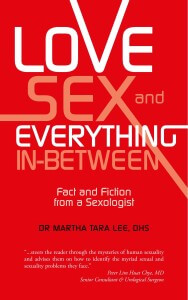
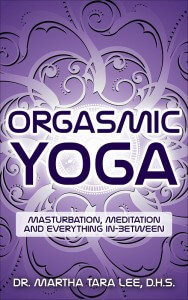
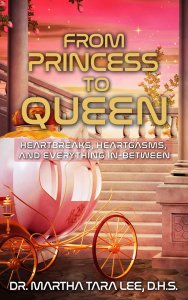
An accomplished author, Dr. Lee has published four books: Love, Sex and Everything In-Between (2013), Orgasmic Yoga: Masturbation, Meditation and Everything In-Between (2015), From Princess to Queen: Heartbreaks, Heartgasms and Everything In-Between (2017), and {Un}Inhihibited (2019). Her contributions have been recognized with numerous honors, including Her World’s Top 50 Inspiring Women under 40 (2010), CozyCot’s Top 100 Inspiring Women (2011), Global Woman of Influence (2024), the Most Supportive Relationship Coach (Singapore Business Awards, APAC Insider, 2025), and the Icon of Change International Award (2025).
You can read the testimonials she’s received over years here. For her full profile, click here. Email her here.